
LAW - Center for the Human Rights of Children
Center for the Human Rights of Children
Advancing and protecting the human rights of children
The Center for the Human Rights of Children (CHRC) is an interdisciplinary center committed to protecting and advancing the human rights of children. Guided by the belief that children’s rights are human rights, the CHRC is engaged in research, scholarship, advocacy, and outreach programs to address critical issues affecting the lives of children. The CHRC strives to honor and advance the principles derived from the UN Convention on the Rights of the Child and believes that a child’s survival and healthy future is dependent on family, community, civil society, and government working toward a shared vision that protects their fundamental human rights.
Child Migration — A Right to Safety, Family Unity, and Nationality
The world is experiencing the greatest migration crisis since World War II, with unprecedented numbers of migrants attempting perilous journeys. The Mexican migration corridor is the top migration corridor in the world, with increasing numbers of children and families seeking refuge at the US Southern border. Children are the most vulnerable migrants—fleeing violence, abuse, conflict, neglect, and poverty—often seeking refuge alone in the United States. Yest, International refugee and US immigration legal systems do not treat children as unique or distinct from adults. Consequently, children face immense challenges and risks in seeking safety and sanctuary as they navigate legal systems that do not provide protections aligned with their age and development.
The CHRC stimulates efforts to understand, protect, and apply the rights of children both in the United States and around the world. We at the CHRC are working to resolve these issues via an active agenda of interdisciplinary research and scholarship, advocacy, outreach, and service. Local, national, and global activities include faculty and student research fellowships, immersion programs, and project development designed to address critical and contemporary children’s rights issues across the globe.
Child Trafficking — A Right to Freedom from Exploitation and Violence
Human trafficking and exploitation represent one of the most serious assaults on human rights. The crime of compelled labor for services and commercial sexual exploitation violates the dignity of body, mind, and spirit. While women and children are estimated to comprise the majority of victims, children remain the least identified cohort of victims. Current research and policy efforts to understand and combat human trafficking and exploitation often address survivors as one homogenous group, without recognizing the special needs of children.
The CHRC engages in a number of activities to address the distinct needs of children who are trafficked, to prevent child trafficking, and to respond to survivors of child trafficking, in an effort to ensure their dignity and rights are protected. Our work at the CHRC includes research, outreach and education, training and consultation, capacity building, advocacy, and systems change. Through this work we often collaborate with a continuously-expanding network of individuals and organizations on a number of different projects both in the US and abroad. Finally, we teach a graduate level interdisciplinary course on child trafficking and exploitation in order to cultivate the next generation of experts and professionals responding to this issue.
Climate Crisis and Children — A Right to Life and Health
The intimate association between the physical world in which children live and the quality of their lives—the water that they drink, the air that they breathe, and the quality of their housing, schools and communities—has a profound impact on children's health, happiness, and long-term development. The current climate crisis and increasing environmental toxins disproportionately impact millions of children as they matriculate to adulthood. The negative effects include school absenteeism, learning difficulties, lack of employment, lifelong health problems, and displacement from their home. There is a critical need to raise awareness of the linkages between environmental factors, the disproportionate impact climate change has on children, and the well-being of children through a human rights framework.
As such, the CHRC is focused on efforts to advance children’s rights to equal protection from environmental hazards, access to services, and participation in environmental decision-making, and the right to a healthy environment in which to live, learn, work, and play.
In the News
John and Kathy Schreiber to fund NIJC fellowship for Loyola law grad
John and Kathy Schreiber have generously funded an unprecedented two-year post-graduate fellowship at the National Immigrant Justice Center (NIJC) for a Loyola School of Law graduate.
Learn More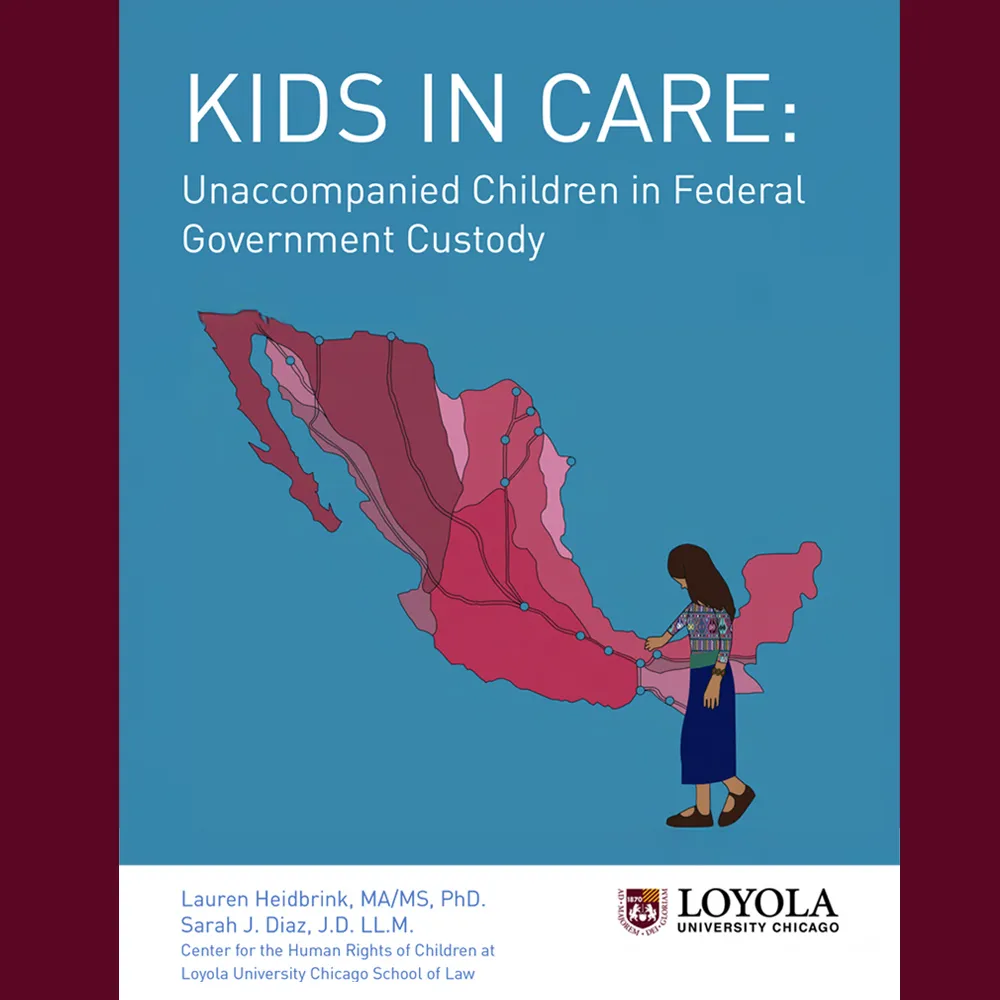
CHRC releases first-of-its-kind study on treatment of migrant children in U.S. custody
This 18-month, interdisciplinary study includes surveys and interviews of often-inaccessible facility staff, clinicians, attorneys, and advocates.
Read the report
Loyola launches the Holistic Immigration Hub
Building on the scope and approach of Loyola’s School of Law and the CHRC, the Hub will solidify Loyola’s standing as a national thought leader in immigration law.
Learn More
From Research to Reform: CHRC Submits Input on U.S. Child Trafficking Policy
Students researched and drafted this input, outlining evidence-based recommendations to expand protections and strengthen federal efforts to combat child trafficking.
Read our inputEvents
Sacred Ground, Contested Space: The Sanctuary Movement Past and Present
Friday, February 6, 2026
9:00 a.m. - 11:30 a.m.
Bringing together faith leaders, legal practitioners, and immigrant advocates—this program will reflect on sanctuary as an expression of conscience and solidarity.
The Center for the Human Rights of Children (CHRC) is an interdisciplinary center committed to protecting and advancing the human rights of children. Guided by the belief that children’s rights are human rights, the CHRC is engaged in research, scholarship, advocacy, and outreach programs to address critical issues affecting the lives of children. The CHRC strives to honor and advance the principles derived from the UN Convention on the Rights of the Child and believes that a child’s survival and healthy future is dependent on family, community, civil society, and government working toward a shared vision that protects their fundamental human rights.