Arthur J. Schmitt: Promoting research to serve humanity

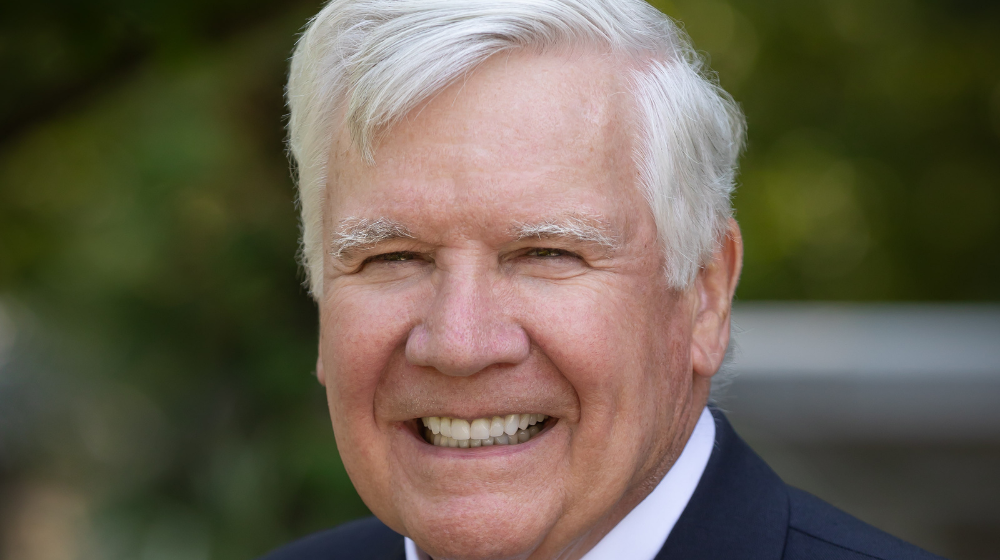
Arthur J. Schmitt, an industrialist executive who devoted his resources to promoting his strong Christian principles and ideals, was the driving force behind the creation of the Arthur J. Schmitt Foundation in 1945.
"The important thing to do is to figure out a place for yourself in the world and then do something about it," Schmitt was quoted as saying. By 1955, the foundation began to focus its resources on granting fellowships for graduate degrees, continuing Schmitt's commitment both to education and to developing responsible leaders.
At Loyola, the Schmitt Dissertation Fellowship Program challenges doctoral students to move beyond pursuing knowledge for its own sake to consider how one's research serves humanity.
"It is gratifying to observe that the core values we espouse--civic engagement, and service of humanity through learning, justice, and faith--are indeed reflected in the work of our Schmitt fellows," says Samuel Attoh, dean of Loyola's Graduate School. "This fellowship allows students to become engaged in social issues and challenges, while connecting Loyola's intellectual resources to the community's pressing social, civic, and ethical problems."
Schmitt fellows represent a wide range of disciplines, with research addressing important issues in social justice, physical well-being, and the larger human experience.
For example, Schmitt fellow Christopher Malarkey's research in chemistry could have far-reaching effects for the pharmaceutical industry. "The antidepressant and antimanic drug, lithium, has been used in the treatment of bipolar disorder for over 50 years, but people didn't understand how it worked," says Malarkey. "Receiving the Schmitt Fellowship allowed me to focus on my research, which helped to determine the mechanism of lithium as a treatment inside the body."
Malarkey received a PhD in June and a postdoctoral fellowship at the University of Colorado Health Sciences Center will allow him to research malfunctioning mitochondria, which have been implicated in a number of diseases.
Meghan Burke, a 2008-2009 Schmitt fellow, will take a qualitative look at diverse urban communities, including how residents think about diversity, their own racial positions and individual forms of activism or involvement. "The Schmitt Fellowship will allow me to complete my dissertation in a timely manner and to produce the kind of quality scholarship that might be difficult with competing responsibilities," says Burke. "My research is not only for academics. It will also directly serve the communities I study."
More than 90 percent of Loyola's Schmitt fellows complete their degrees, as compared to a national average of 50 percent completion. "Two benchmarks for a successful doctoral program are the timeframes it takes students to complete both their dissertations and their degrees," says Patricia Mooney-Melvin, associate dean of the Graduate School. "As a result of Schmitt funding, these benchmark times shorten, improving the university's ranking among graduate institutions."
The Schmitt Foundation also partners with Loyola through an endowed chair for Dr. Adriaan Peperzak, who has been the Arthur J. Schmitt Professor of Philosophy since 1991.
"This distinction has provided me a great opportunity to research, to write, and to organize and participate in international conferences," says Peperzak. "For example, I was able to coordinate the first international conference featuring the renowned French philosopher, Emmanuel Levinas."
Since its inception, the Arthur J. Schmitt Foundation has played an instrumental role in developing ethical future leaders. "Loyola has really been an ideal partner," says Mary Dwyer, treasurer and member of the Schmitt Foundation Board. "The university demonstrates the impact that these fellowships have on the lives of students and their futures. Loyola is the epitome of best practices."