Bob Parkinson: MBA in Health Care Management program

Tackling the daunting challenges facing the U.S. health-care industry requires leaders who are not only knowledgeable, but who also have the ethical foundation needed to make tough funding and policy decisions.
Launched in 2007, Loyola's new Master of Business Administration in Health Care Management is designed to address that need in a way that's singular to Loyola.
Health care is the nation's largest industry, accounting for 16 percent of the U.S. gross domestic product. It is also an area that is rapidly developing academically and professionally. "When we decided to create a distinctive MBA curriculum that focused on a specific industry sector, health care was at the top of the list. It was also a logical choice given Loyola's reputation in medicine, law and nursing," says Abol Jalilvand, PhD, dean of the School of Business Administration.
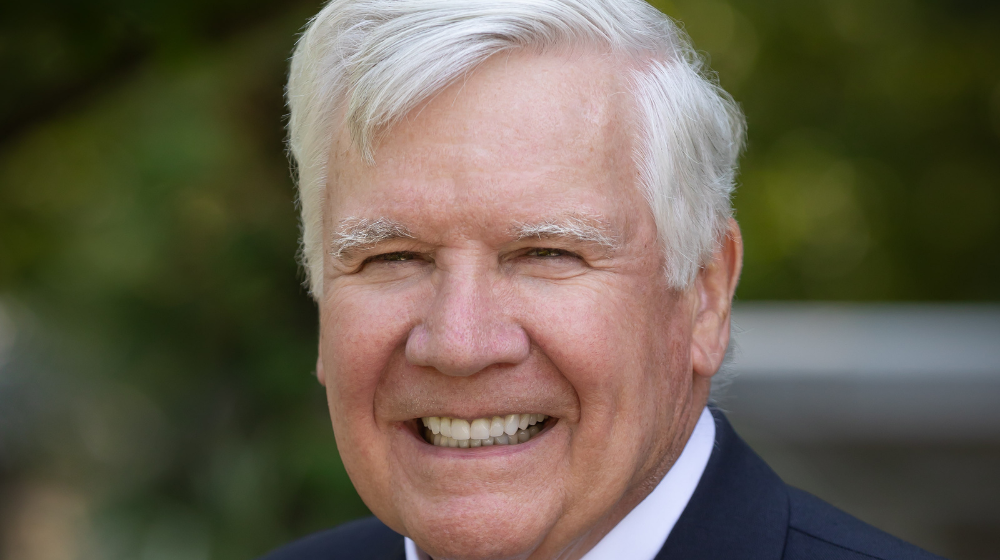
To create this new program, Loyola partnered with Baxter International Chairman and CEO Bob Parkinson. Parkinson brings a unique perspective to the program. He formerly served as dean of Loyola's School of Business Administration and Graduate School of Business and had a distinguished 25-year-career at Abbott Laboratories, serving as its president and chief operating officer, before taking the helm at Baxter four years ago. Loyola's MBA in Health Care Management program is funded by a generous donation from the Baxter International Foundation, as well as Mr. Parkinson.
"Loyola is the only university within Chicago with a business school, law school, medical school, and nursing school--all are critical dimensions in an industry as diverse as health care. This program draws upon all these areas of expertise," says Parkinson.
"But what further distinguishes Loyola is its Jesuit, Catholic tradition of serving others and promoting social justice," he continues. "In health care, there are multiple ethical and moral dimensions, such as the 47 million Americans who are without health insurance. This program ensures that students are educated with an awareness of the social, ethical, and moral aspects of the health-care system--and that's something that's truly a distinct quality of Loyola."
This MBA program is also unique in that it operates as a cohort, with students attending all of the required courses together. This creates a sense of community among the students.
"The first year of the program has been exciting for me and the diversity of the cohort, with students representing many fields of health care, has provided a unique opportunity for networking... and for forming friendships," says Julie Garrett, RN, BSN, BA, CCRN and manager of the Medical Intensive Care Unit at Northwestern Memorial Hospital. "I'm able to apply concepts from my coursework immediately at my job and hope to build on my experiences for my long-term career goal of becoming a chief nurse executive."
For fellow student Syed Zaffer, an intern doing policy research for the Health and Medicine Policy Research Group, Loyola's graduate program has helped clarify his career direction. "When I graduated from college, I was at a crossroad," says Zaffer. "This program has provided me with direction and extraordinary learning opportunities, both in the classroom and throughout the city."
In meeting some of the program's Baxter scholarship recipients, Parkinson was impressed with the caliber of the students. "They were bright, informed, and motivated, and because of the cohort design of the program, students have an opportunity to not only learn from their professors, but from each other," he says.
"It is my belief that Loyola's program will graduate students who are not only technically knowledgeable about the diverse dimensions of health care, but who will help to change the health-care system in the right way, by remaining sensitive to their social responsibilities."