
Crime Scene - Forensics
Anatomy of a Crime Scene
A crime scene is a puzzle that holds the clues to solving a case—but it takes expert training to be able to crack those clues. Seniors from Evanston Township High School (ETHS) got a firsthand lesson in how to do just that when they visited Loyola’s Forensic Science undergraduate labs to learn about crime scene investigation (CSI).
Listen to the audio that sets up the scene (:35 seconds).
The scene
Clues and evidence at a crime scene are a key for investigators. Law enforcement detectives are usually first on a scene. Then, evidence technicians come to collect any trace of evidence. This is sent to a crime lab, where each item is distributed to select areas within forensics. If there is a body, a medical examiner will perform an autopsy and will often consult with a forensic anthropologist if they have unanswered questions.

The building blocks of CSI
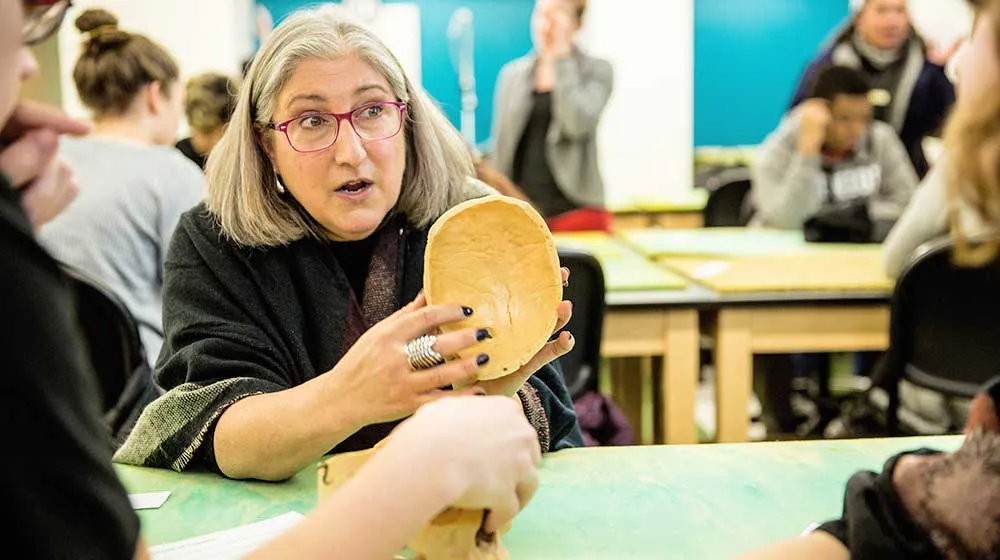
Forensic Anthropology
By applying the science of biological anthropology to the legal process, these anthropologists help law enforcement determine if bones are human or animal. They also help with identification when the cause of death is uncertain and when there are minimal human remains. ( Anne Grauer, PhD, left )
Forensic Biology
Forensic Biology and DNA forensic scientists analyze and identify evidence from a variety of sources, such as semen, saliva, and blood. Based upon what is found after the analysis, connections can be made from the crime scene to victim and/or suspect along with connecting a victim to a suspect.
Forensic chemistry and toxicology
It is the job of a forensic drug chemist to identify unknown substances in seized drugs. However, if a drug analysis is needed on biological samples such as human tissue or bodily fluids, a forensic toxicologist will conduct those tests. Drugs can be found in almost any part of the body including blood, urine, vitreous humor (liquid inside the eyes), saliva, sweat, ear wax, breath, internal organs (liver, heart, stomach), hair, and fingernails.

Criminal Justice
The system through which crimes and criminals are identified, apprehended, tried, and punished. Law enforcement officials, drug enforcement agents, investigators, judges, lawyers, and policymakers all work within this system.
Loyola's nationally ranked interdisciplinary program combines Biology, Anthropology, Chemistry and Criminal Justice. Using tools from these disciplines, students investigated a replicated crime scene, one that could easily appear in the Chicago area.
Anatomy of a Crime Scene
A crime scene is a puzzle that holds the clues to solving a case—but it takes expert training to be able to crack those clues. Seniors from Evanston Township High School (ETHS) got a firsthand lesson in how to do just that when they visited Loyola’s Forensic Science undergraduate labs to learn about crime scene investigation (CSI).
Listen to the audio that sets up the scene (:35 seconds).

A portion of skeletal remains used by Loyola undergraduates in their assessment of the crime scene.
Bones
Forensic anthropologists will inspect the skeletal remains for holes, fractures, and other signs of trauma, along with distinguishing features that allows them to identify the individual.

Students practice fingerprint techniques that help reveal fingerprints left on crime scene evidence.
Gun
A pattern evidence examiner could take photographs, dust, or use special lighting to reveal possible fingerprints on the gun. Prints would then be lifted in several possible ways, such as using tape. Special care must always be taken to preserve any prints.

Students watch as Loyola undergraduates conduct chemical tests on clothing.
Clothing
Forensic analysts will run any number of tests from clothing samples by using a number of various tests, including a dye test where a dye is applied to the fluid to indicate the presence of blood, semen, or saliva.
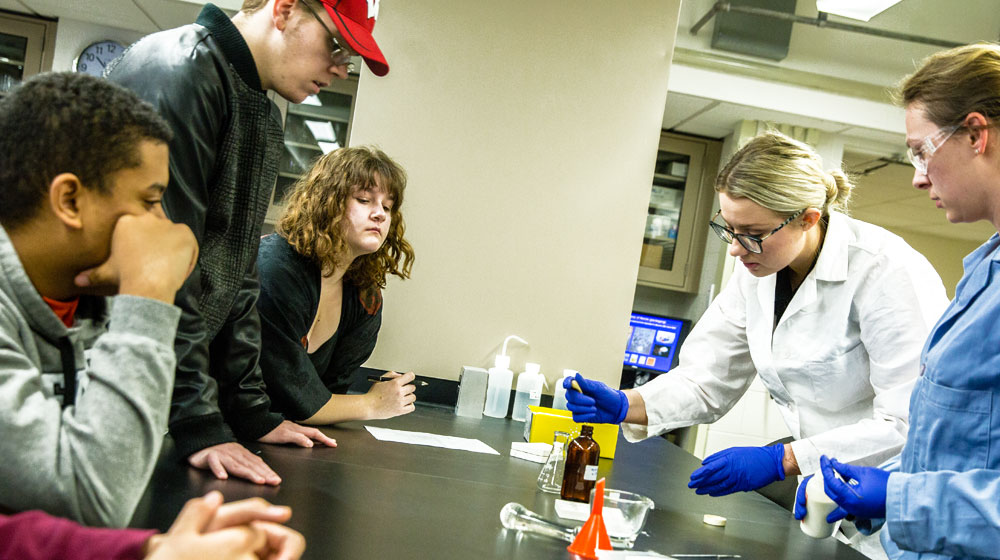
Students look on as Forensic Science program students test substances like poppy seeds to determine if they are substances found in street drugs.
Substances
Forensic chemists and toxicologists will take a sample from the bag and conduct drug screening tests like one that uses antibodies to detect a reaction to specific substances. That reaction will determine if a sample is positive or negative for a drug.
“We're a small piece of the process. We don't solve crimes. I want visitors to our labs to get a realistic snapshot of forensic anthropology.” — Anne Grauer, PhD, chair of Anthropology and forensic anthropologist for Cook County
Loyola's nationally ranked interdisciplinary program combines Biology, Anthropology, Chemistry and Criminal Justice. Using tools from these disciplines, students investigated a replicated crime scene, one that could easily appear in the Chicago area.