
Story - Stritch - Care in the curriculum
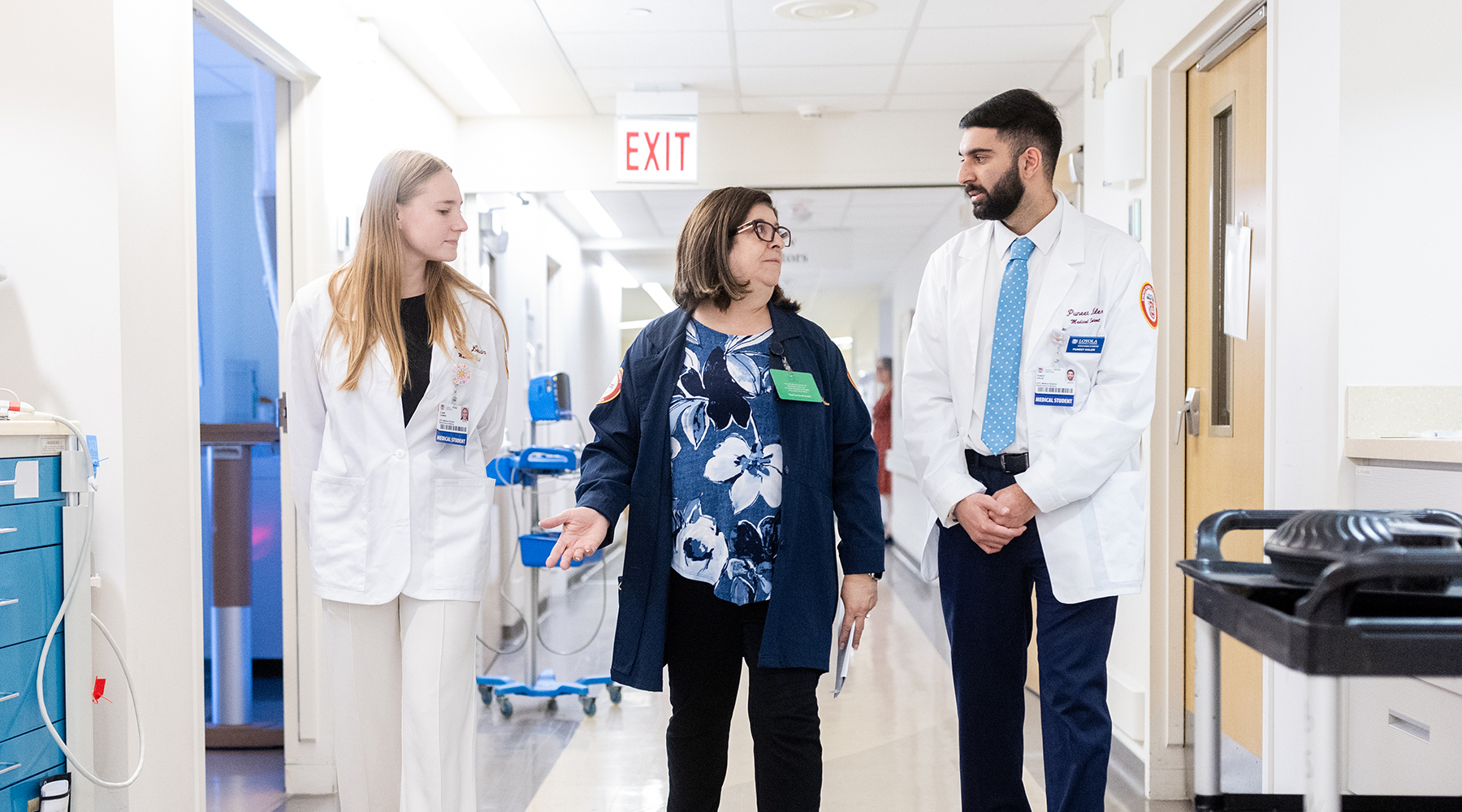
Stritch School of Medicine students Claire Lohman and Puneet Kaler shadow Loyola Medicine Chaplain Maria Rego-Herrera during her rounds at the Loyola University Medical Center.
For Loyola medical students, spiritual care is part of the curriculum
Shadowing hospital chaplains offers an education in empathy, holistic care
At Loyola’s Stritch School of Medicine, shadowing hospital chaplains is a required part of the curriculum for first-year medical students. Students report a deeper understanding of spiritual care and the role of a hospital chaplain after completing the experience.
A doctor who has the tools and training to respond to a patient’s emotional wellbeing in addition to physical needs will be better prepared to care for the patient in a holistic way.
That is one of the key tenets of the Chaplain Mentor Program at Loyola’s Stritch School of Medicine. The program—a collaboration between the Loyola University Chicago Health Sciences Campus Ministry, Stritch Department of Medical Education, and Loyola University Medical Center Spiritual Care & Education office—pairs first-year students with a trained hospital chaplain as they make their rounds meeting with patients at the Medical Center, which can include visits to the trauma and intensive care units.
“The reason this program exists is not just because it leads to better health care outcomes. It's because it's the type of care that patients deserve,” says Michael McCarthy, associate professor and the graduate program director for Healthcare Mission Leadership. “Our understanding is we're the only medical school in the country that has chaplain shadowing as a required part of the curriculum.”

Loyola University Chicago
The pursuit of purpose
Loyola University Chicago has yielded research that not only informs, but has real impact.
Read more about Loyola's social impact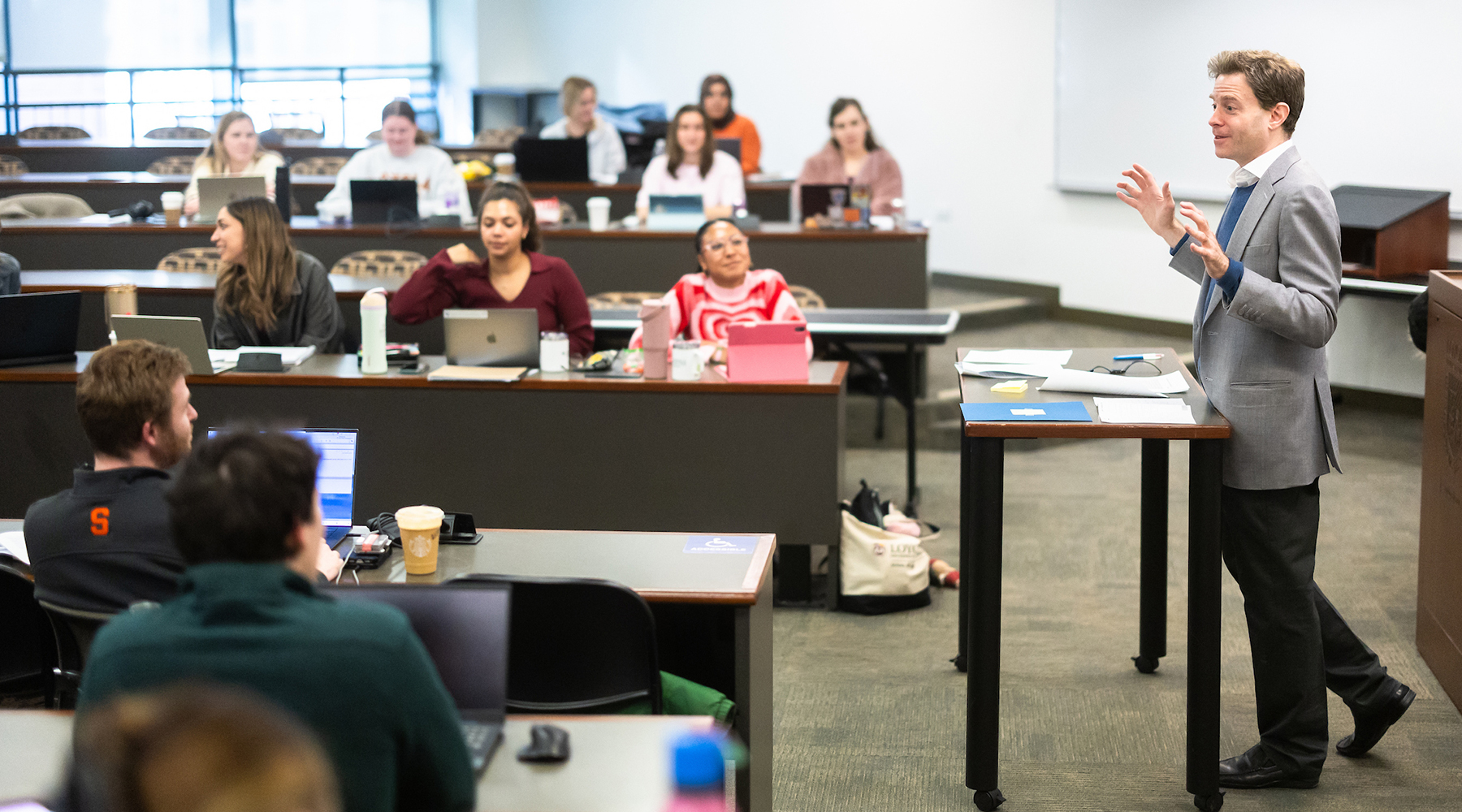
School of Law
Weekend warriors
Since 2016, Loyola’s School of Law has offered a flexible path to a law degree for career changers that prepares alums to lead with purpose.
Read more about Weekend JD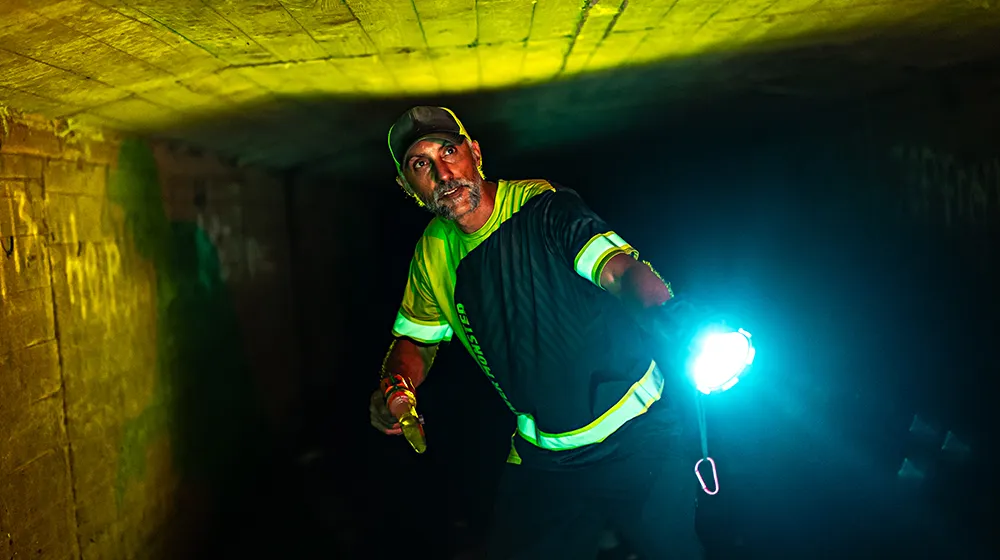
Parkinson School of Health Sciences and Public Health
Research for good
In suburban Cook County, a Loyola researcher is treating stormwater with larvicide to reduce mosquito populations—and West Nile virus.
Read more about public healthStritch students say the experience—which includes an introduction to specialized training for chaplains and their roles in the health care team—helped them learn about how to be present for patients and their families in difficult times. “A student may be confronted with a death for the first time as a medical student or person in the Chaplain Mentor Program,” says McCarthy. “Watching a chaplain in that situation is another kind of learning experience for the student.”
Claire Lohman (MD ’29) had been prepared for what she would see shadowing chaplain Maria Rego-Herrera on her rounds of Loyola University Medical Center’s oncology and pediatric units. Even so, the scene Lohman witnessed in the first hospital room she visited came as a shock. In a care unit decorated with balloons, an older man lay in a hospital bed with an assistive speech device at his bedside. He had summoned Rego-Herrera to the room to offer him Communion, but she learned she could not perform the rite safely. The patient had a damaged lower jaw and was unable to chew or swallow the host.
To honor the patient’s request as faithfully as possible while ensuring his safety, Rego-Herrera asked if he would like a prayer instead of receiving Communion. He typed an affirming reply and, standing by his bedside, she prayed for “God to watch over [the patient],” assist with a speedy recovery, and “help him have better health in the future and to help his family through a difficult time,” Lohman said.
“This experience really taught me the importance of just sitting with a patient. Even though silence might feel like an uncomfortable thing, it might be the most appropriate thing. To just allow the patient to absorb it and to be there as a comforting presence,” Lohman said.
Ann Hillman, director of Health Sciences Campus Ministry, says chaplains occupy a unique position in the health care team. “A hospital chaplain enters a patient’s room without an agenda. They don’t have a pre-determined treatment plan. They simply meet the patient where they are and come in with the skills of reflective listening, spiritual assessment, being present and offering emotional support to determine what the patient needs.”
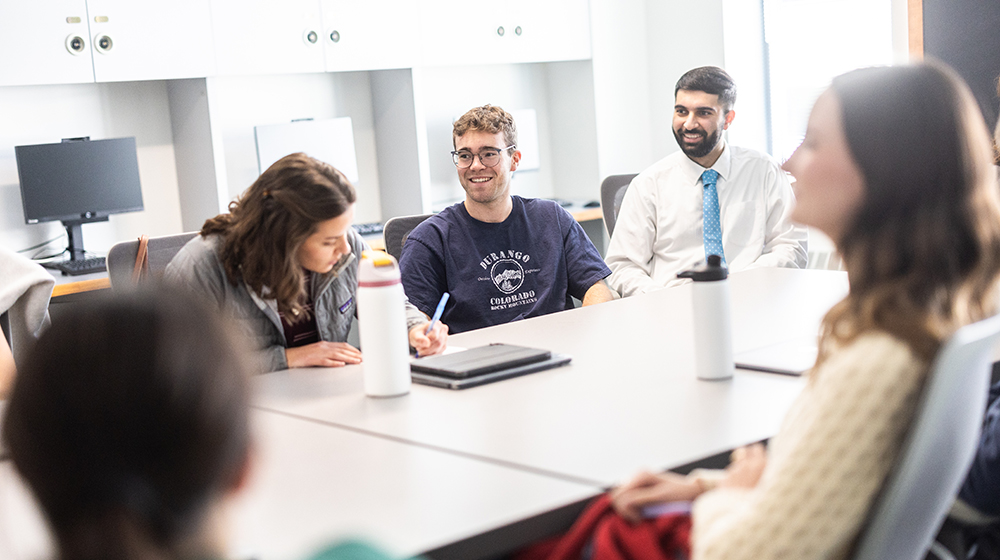
Stritch School of Medicine students reflect on their time shadowing Loyola Medicine chaplains as part of the Chaplain Mentorship Program.
“This experience really taught me the importance of just sitting with a patient. Even though silence might feel like an uncomfortable thing, it might be the most appropriate thing. To just allow the patient to absorb it and to be there as a comforting presence.” Claire Lohman (MD ’29)
Hillman and McCarthy are co-authors on a recent study, published in the Journal of Health Care Chaplaincy, that found medical students who participated in chaplain mentoring highly valued the experience and appreciated the chaplain’s role as part of the patient care team. In addition, a University of Pennsylvania study published in 2020 reported that 98% of the respondents who took a first-year elective course shadowing a hospital chaplain would recommend it to their fellow medical students. The empathic skills students learn have been found to improve patient care as well. In a study of 1,470 adults with chronic low back pain, researchers at the University of North Texas Health Science Center found that patients treated by very empathetic physicians indicated better outcomes than those treated by less empathic physicians, including reporting less pain, fewer back disabilities, and a better quality of life.
The strong relationship between Stritch and Loyola University Medical Center chaplains, who hold academic positions at the medical school, contributes to the program’s success. “One of the advantages of being in a Catholic health system is we have a chaplain service that recognizes the importance of both their role in the hospital, but also at an academic medical center of being teachers. They are seen as medical educators,” says McCarthy. “They're there alongside the physicians and the nurses to help teach the medical students about what it means to take care of a patient in a holistic way.”
Overall, the program prepares medical students to better treat patients from all walks of life.
“This program is an important part of our Jesuit, Catholic identity as a University because it takes seriously the holistic needs of human persons, including spiritual needs. It helps our students explore the diverse religious and cultural traditions of the patients they will one day serve,” Hillman says. “It’s an example of how we are training future physicians to be compassionate, inclusive, and competent practitioners.”