
From the Classroom to Clean Energy: SES Alumna Builds a Career in Sustainability
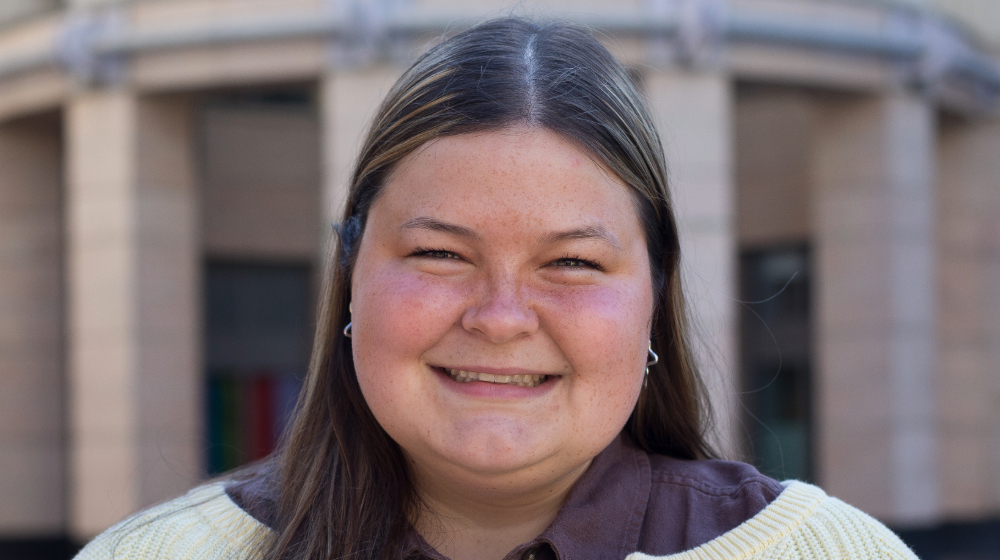
For School of Environmental Sustainability (SES) alumna Grace Rockenhauser (MS ’24), a career dedicated to the environment grew from a connection to nature that began long before pursuing her graduate degree from Loyola University Chicago.
Planting seeds
Grace grew up in a household where her family had a real appreciation for and connection to nature. One summer, she and her dad planted a garden in the backyard. That summer project eventually grew into a five-year tradition of growing produce and sharing it with her neighbors.
Her interest in agriculture and sustainable practices continued to grow through high school, where she took an AP Environmental Science course and became deeply involved in the many physical and social sciences that come together in the environmental field. As a summer camp counselor, she served as the nature skills leader and developed a wide range of outdoor programming for the young campers.
Grace initially pursued a different professional path, earning an undergraduate degree in elementary education and becoming a teacher. Although she loved teaching and building meaningful relationships with her students, she eventually wanted to deepen her work as an environmentalist, which led her to Loyola.
Pursuing growth at Loyola
At SES, Grace earned a Master of Science and Sustainability on the professional track, focusing much of her coursework on environmental law and policy.
“I loved that the Loyola master’s program at SES was flexible with undergraduate degrees and course enrollment,” she said. “I was able to learn from so many different people with unique perspectives, and that shaped my time at Loyola.”
Grace made it a point to supplement her coursework with experiences both at Loyola and in the wider Chicago community.
During her first semester, she joined Nourish, a cohort focused on sustainability, food justice, and nutrition, and became involved with the SES Diversity, Equity, and Inclusion efforts, which included supporting a student roundtable where students could share their experiences.
Missing the opportunity to work directly with young people, Grace also joined Loyola4Chicago, through which she volunteered at Jordan Elementary School, a Chicago Public Schools campus, on a weekly basis.
Her coursework helped her connect environmental concepts to real-world problems. The courses in water, natural resources, and energy law and policy were particularly valuable.
“Being able to see the policies in place at the time and think critically about climate mitigation on the regional and local scale was an incredible learning opportunity,” Grace said.
Her learning extended into several internships focused on urban agriculture, environmental justice, food access, and sustainability communications.
As an urban agriculture intern, Grace gained hands-on experience with hydroponics, aquaponics, mushroom cultivation, and urban gardening. The experience deepened her understanding of Chicago’s local food system and eventually led her to a summer internship with Experimental Station’s Link Up Illinois team.
Link Up Illinois works to make farmers markets more accessible by matching Supplemental Nutrition Assistance Program (SNAP) purchases and providing Link Up benefits that can be spent on fresh produce. During her internship, Grace traveled to more than 20 farmers’ markets across Illinois, surveying participants about their experiences with the program and opportunities for improvement.
The work allowed her to spend time in communities across the state and learn directly from farmers, vendors, and customers.
Grace also interned with Loyola’s Office of Sustainability, where she contributed to university sustainability initiatives, collaborated with departments, developed newsletters, and spoke with incoming students about opportunities to become involved in sustainability on campus.
Together, these experiences strengthened her communication skills and helped her better understand the diverse needs of communities engaged in sustainability work.
Recharging her career
After graduating from Loyola in December 2024, Grace found an opportunity to combine her backgrounds in education and environmental sustainability as a program instructor at the Evanston Ecology Center. There, she led camps, nature education programs, and school visits.
In June, she transitioned into the clean energy sector, joining Energy Solutions, a California-based company, as an associate working with Illinois Shines.
Illinois Shines is a state program that supports solar development through project incentives, including residential and community solar power. For Grace, working on a clean energy program in Illinois let her apply what she learned at SES to tangible climate solutions in a place she considers home.
Grace was recently promoted to project manager, allowing her to become more involved with the client side of the work and help ensure collaboration among the various groups participating in the program. Her work is also expanding to include Illinois Solar for All, a program designed to increase access to solar energy with an emphasis on environmental justice.
Grace sees clear connections between her current work and her SES education, particularly the program’s emphasis on the social dimensions of environmental challenges.
“The social science aspect of communicating about environmental concerns and mitigation has become a large part of the mission for my position,” she said.
Courses such as Energy Law and Policy and Public Policy Process provided a foundation for understanding the policies that now shape the programs she works with professionally. Her SES education also gave her a foundation in renewable energy technologies and the different ways communities may respond to clean energy development.
Leading the way
Just as importantly, her experiences at Loyola helped her develop confidence as a leader.
“Loyola also gave me the confidence to work in a project manager position, as I was given many opportunities to lead projects throughout my internships and classes,” Grace said. “The person who left Loyola with her master’s was completely different than the student who walked in, and I will forever be grateful for that.”
For current SES students preparing to begin their careers, Grace encourages them to take advantage of opportunities both at Loyola and throughout Chicago.
“Get involved at Loyola and in the Rogers Park and Chicago community,” she said.
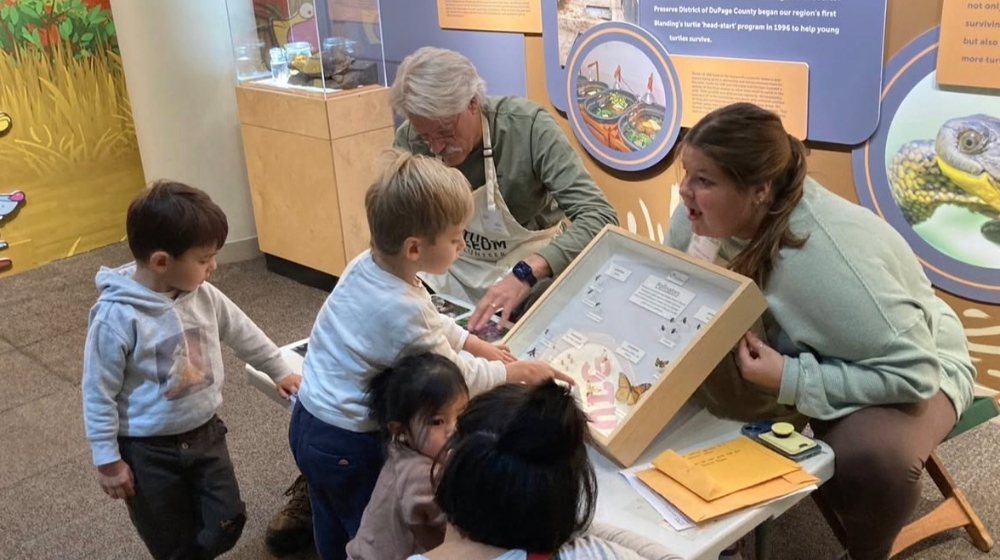
Grace practiced that advice herself, including through volunteering at the Peggy Notebaert Nature Museum, an experience she describes as one of the most rewarding parts of her week.
She also encourages students to remain curious, listen to others, ask questions, and approach new experiences with a growth mindset. She emphasized that the relationships students build along the way can become just as valuable as the skills they develop.
Grace experienced firsthand the challenges of entering the workforce and finding the right position. Ultimately, connections with Loyola peers helped lead her to Energy Solutions and the career she has today.
Environmental work can be demanding, she acknowledged, making community and personal well-being especially important.
“Our work is not easy, and it can demand so much more than our time and energy, so take care of yourselves and know that the Loyola community is there for you to fall back on and use as a support,” Grace said.
Looking back, she remains grateful to the people and experiences at SES that helped transform her passion for the environment into a career advancing clean energy and sustainability.
“Thank you to every professor, faculty member, and classmate at Loyola who shaped my future and fulfilled a dream that I could never have imagined possible.”