
New Work from Dr. Aaron Baker
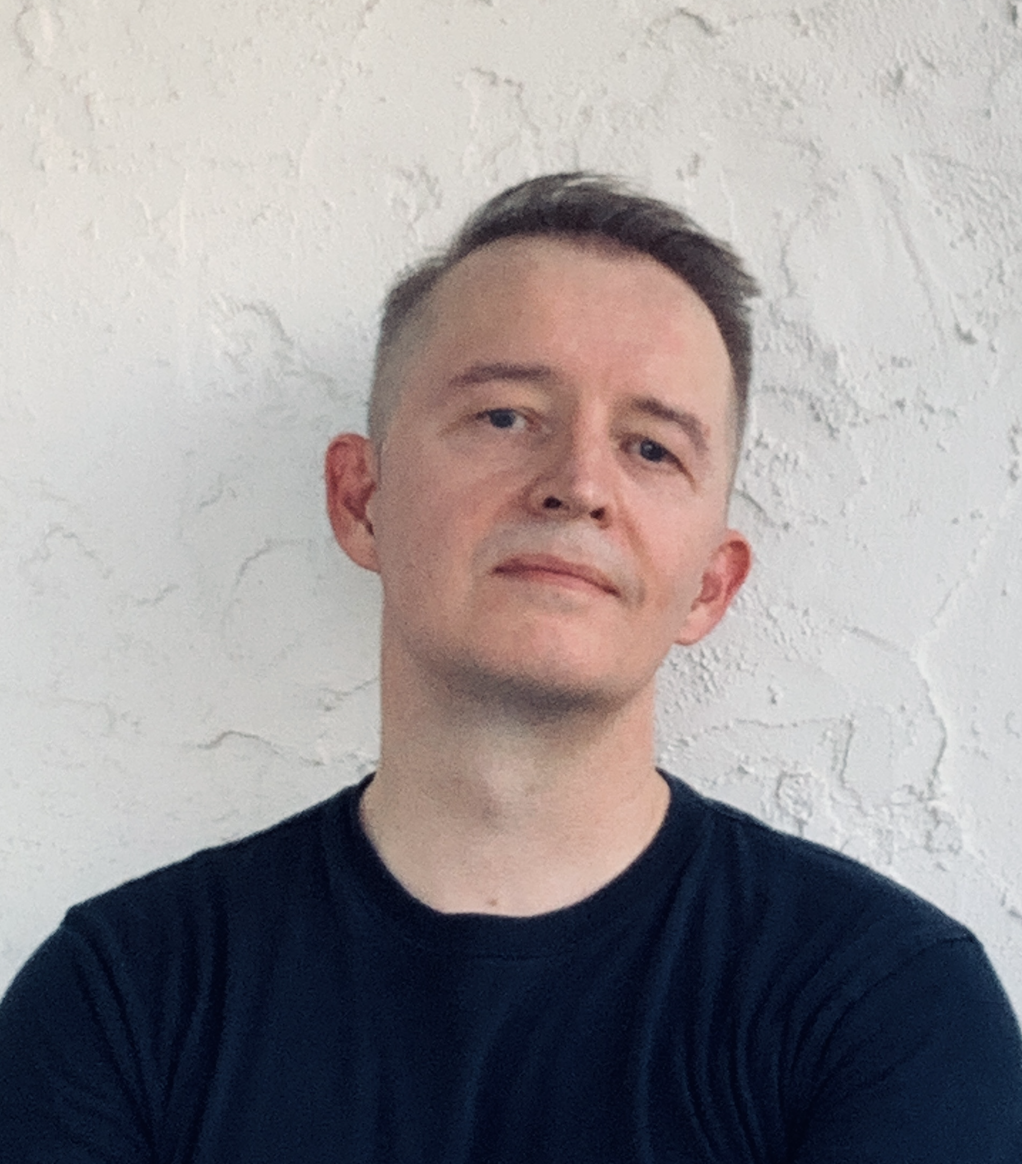
Can you talk me through the process of writing your book/poem? How did you conceive of it and did your process change at any point?
Over a few days in the middle of March of 2020, the beginning of Covid, I sketched out the outline for a twenty-section poem describing a journey guided by the spirit of Walt Whitman from west to east across a mythologized American landscape (a kind of reverse Manifest Destiny).
A visit to the poet Robinson Jeffers' Rock House and Hawk Tower in Carmel-by-the-Sea gave me the idea to start the journey there, which in turn gave me the idea to conclude the journey at the Alice Austen House and Museum on Staten Island. I was road tripping at the time, and two days later, a coffee table book in an Airbnb in Tempe provided ideas for three more sections. This book was Contemporary Folk Art: Treasures from the Smithsonian American Art Museum, an excellent choice I've got to say for an Airbnb coffee table. Then a horror movie on Netflix gave me another section. Was this a process? The poem's overall shape was clear from the beginning and never changed, but for a little while there the poem seemed to be consuming anything and everything at hand for material.
I worked on the sections simultaneously in a single Word doc, which helped me to continually conceptualize and hold the poem in view as a unified piece instead of letting it devolve into a medley of stand-alone parts. The poem's length and scope gave rise to many challenges, which turned out to be unexpectedly enjoyable--it meant that at any given moment I could drop anywhere into the sprawling landscape of the poem, engage with whatever part of its history and mythology I felt like and grapple with whatever problems I felt equal to at the time. This also had the effect of keeping the problem areas in view so I didn't lose sight of them as could easily happen if I worked off separate files.
This book taught me how to write it in the act of doing so, which I suppose is always the case with writing a book. There were fewer plausible roadmaps or models for this one, so it was more difficult than what I'm used to. I enjoyed writing it though and miss being in the middle of it now that it's over. In the early stages of writing the book, I was also feeling very pent-up and shut-in because of Covid, as were we all, so there was an element of escapism in just popping over into this other reality whenever I felt like it.
What does your overall "practice" look like when writing a poem/book of poetry? How has this changed over time?
I knew that I was writing a book with American Experiment, but that's not usually the case. I experience gathering poems together into books as a separate process from the writing of the poems themselves if that makes sense. My previous books are identifiably "themed" though, especially my first, Mission Work, with all its poems about being the child of missionaries in Papua New Guinea.
I write daily, and I like having several projects in progress at once, not all of which are poetry currently. Along with poems, I've got both a novel and a critical anthology on Hart Crane in the works. The next book of poems will be shorter lyrical poems again, but having had a taste of the long poem, I'm now contemplating an even longer and more elaborate one, a prospect that fills me with excitement and terror.
What were some road bumps or “wins” that you experienced while working on it?
The wins come from fixing the road bumps. I had to cut several sections from the book, some of which I spent large amounts of time on, so that was a bummer.
Missing from the published version is a section in the voice of Walt Whitman's spirit as he wanders through contemporary Manhattan. Also cut was a section about the childhood of the NASA manager and engineer who developed and named the Apollo program. I liked a lot of things about that part, and had an idea about what I thought it would accomplish that turned out to be wrong. I was able to use some of that discarded section to end a different section though, so that turned into a win although it took about the longest way around possible to arrive at.
There's a way in which the book-in-progress looms as a problem that needs solving, or more accurately as a list of problems that will need solving. Strong engagement with the work trails off at the point where I stop perceiving fixable problems. Then it's on to the next job site. As a reader I'm aware that I perceive a finished work with a kind of full appreciation of its intent that's probably not possible any more for the author. To them I'm sure it looks more like a former battlefield from which they still carry scars.
What key aspect of the work do you want readers/students to walk away with from this work?
That's a hard question, and I'm sure because I don't have any kind of fixed answer to it that I'd be willing to stand by if forced to defend it for long.
Working in an English Department, I'm aware of the academic focus on the question of "the author" and all the surrounding issues of authorship. To me "the reader" is an even cloudier side of the transaction, in part because the reader doesn't exist. I don't mean that nobody reads poetry in general or my poetry specifically (very funny ha-ha), so questions of audience don't enter into it. I'm thinking about something more like an "ideal reader." Many poets I like write for specific audiences, and I'm sure there are as many ways of thinking about that question as there are poets. I think there's also a strong feeling shared by many of being haunted by our predecessors in important ways, meaning that in some way we're writing for them. This allows a feeling of participating in something older, larger, and certainly more dignified than just us. A press's marketing director, however, will frown a little if you tell her that the book's intended audience is the dead.
Students are a different category. They're very real and present. My poems aren't the focus of my interactions with students except insofar as they represent the shared struggle of writing. For the rest of my teaching career, I can bring up having written a 120-page poem any time somebody complains about having to write a sestina.
What are you currently reading at the moment? What do you look for in a “reading” book?
I'm reading a biography of John Keats (by Nicholas Roe) at the moment. I read eclectically, including a lot of non-fiction on topics I'm interested in, not all of them literary. I read nonfiction extremely fast, but my favorite writing is work that forces me to slow down, linger over the words, and that rewards me for doing so. Moby Dick, Hart Crane, Emily Dickinson are good examples and favorites of mine for this reason.