
'Research is a two-way street'
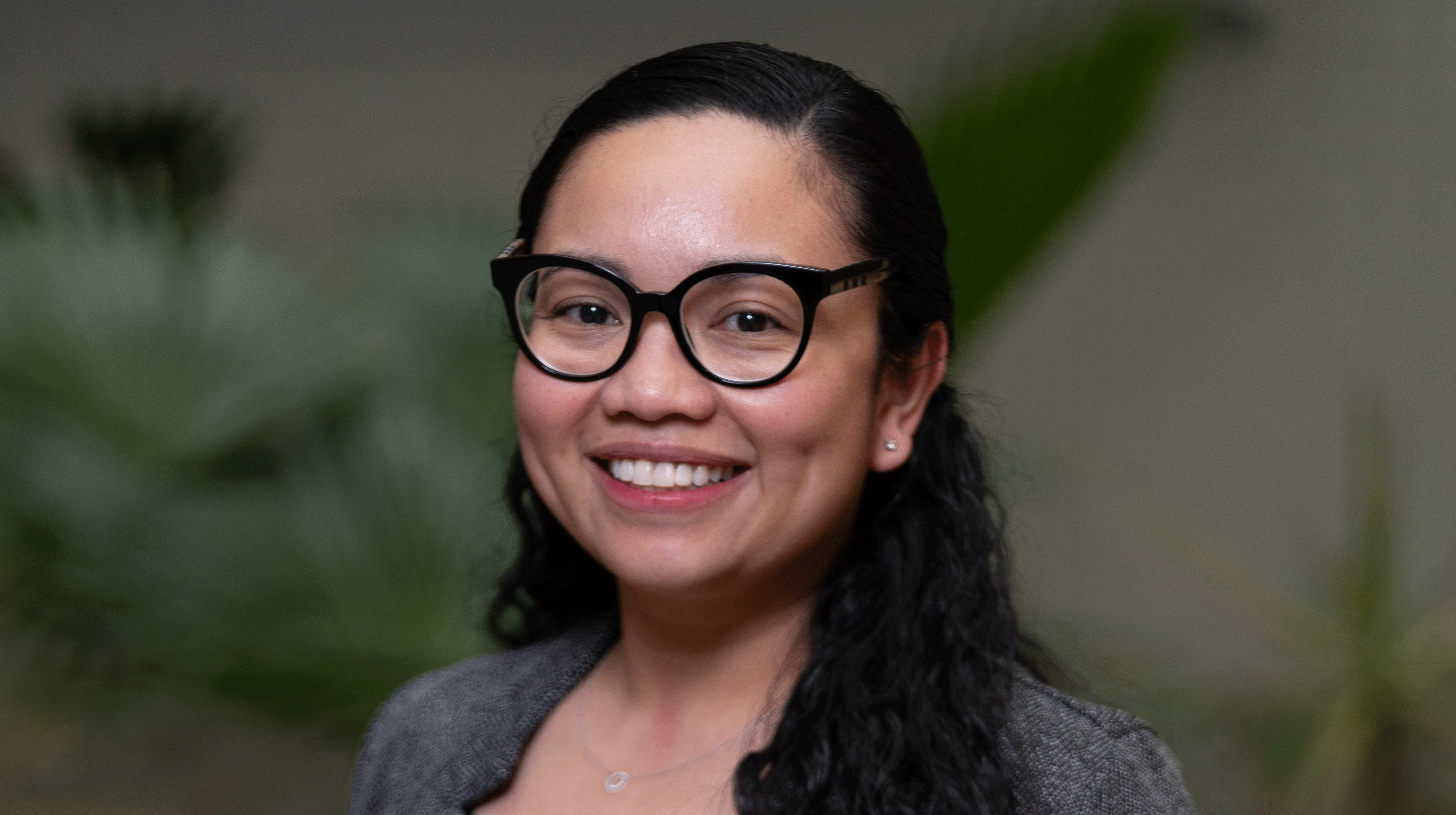
Mary Rose Evans is a clinical research nurse at the Center for Translational Research and Education at Loyola University Chicago and a PhD student at Loyola's Marcella Niehoff School of Nursing. She recently took part in an inaugural National Institutes of Health training program in omics research for nurses.
By Ashley Rowland
Oct. 16, 2026
As a clinical research nurse, Mary Rose Evans cares for kidney transplant patients in clinical trials at Loyola University Chicago.
As a PhD student at Loyola's Marcella Niehoff School of Nursing, she's studying how the long-term success of their transplants could be jeopardized by seemingly routine environmental exposures—from manmade chemicals to naturally occurring substances like mold—at home or on the job.
"This is a population that has come to hold a special place in my heart," said Evans, who has worked at Loyola's Center for Translational Research and Education for eight years. "I want to help transplant recipients be able to safely return to work and thrive after transplantation."
A conversation with one of her patients, a recent kidney graft recipient who was preparing to return to work, inspired her research.
"She asked me, 'I just got a new job as a housekeeper. Do you know if the bleach or cleaning supplies I'll be using could affect my new kidney?'" Evans said. "That question stopped me in my tracks because I didn't know the answer."
She searched for one, consulting with colleagues and scouring existing scientific literature on the subject. What she found was a lack of information and major gaps in understanding how occupational and environmental exposures can affect transplant recipients and their graft outcomes.
Now, several years into her PhD program, Evans believes her research could lead to stronger clinical guidelines—and to more workplace protections for patients exposed to environmental hazards on the job.
"This is a health equity issue," she said. "Many transplant patients return to jobs with potential exposure risks, often in occupations where they have limited control over their work environment. Yet they receive very little guidance on how to navigate those risks while protecting their long-term health."
Boldness in research
In 2026, Evans took part in the first Summer Omics Nursing Institute (SONI) at the National Institutes of Health, which convened nurse scientists from across the globe to further the study of omics.
Omics is a rapidly advancing field that explores the biological mechanisms underlying health and disease.
She credited Loyola Nursing's new Distinguished Scholars Series with introducing her to Professor Yvette Conley, a nationally recognized researcher at the University of Pittsburgh School of Nursing who spoke at the school and encouraged her to apply for SONI. It's just one example, Evans said, of how Loyola's PhD in Nursing program is moving her career forward.
"At Loyola, I've learned to be bold as a nursing researcher. That my questions matter, that I have something valuable to contribute," she said. "I feel valued and seen within Loyola, and when I go outside the school, that gives me confidence to ask questions and speak up, even with people who are experienced and well-known in my field."
Evans reflected on the importance of nursing science and how Loyola Nursing is moving her career forward.
Even as an undergraduate nursing student, you gravitated toward research. Why?
What drew me to research was its rigor. I appreciated how carefully studies are designed, the importance of following protocols, and the attention to detail required to produce meaningful results.
I also enjoyed working with participants (at the CTRE) and educating them about the purpose of a study. Seeing them learn more about their illness and understand the questions we were trying to answer was incredibly rewarding.
To me, research is a two-way street. Researchers gain knowledge that advances patient care, and participants gain a better understanding of their health while contributing to something meaningful.
What are your plans for the future?
I want to go into policy making. I don't think there are enough nurses involved in shaping policy, so that's the end goal for me.
How has Loyola Nursing's PhD program been a stepping stone for your career?
My professors have gone above and beyond in connecting me and other students to their professional networks. They're guiding us into the world of nursing research.
They don't tell you what to do, but ask you what you want to do. As the student, I'm driving my career path while they're guiding me toward it.
Everyone at Loyola Nursing is rooting for you. Everyone wants to see you succeed and see you find your passion.
What's your advice for someone considering a PhD in Nursing?
Go for it. It's hard work, but it's worth it. As nurses, we are uniquely positioned in health care to make a difference, and with a PhD, there's so much you can do.