
Community - The power of community partnership
The power of community partnership
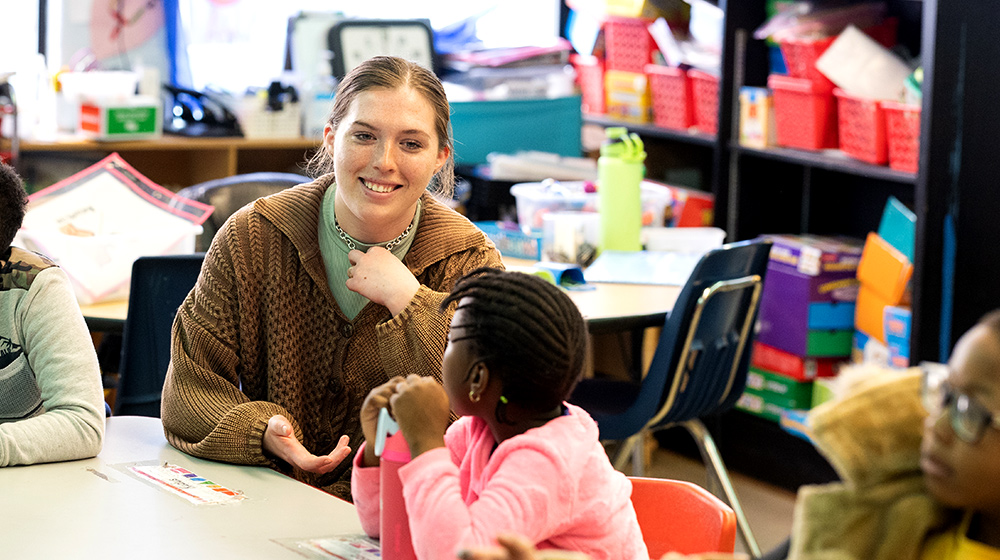
Over the last decade, Loyola University School Partners (USP), an initiative led by Loyola School of Education in partnership with Chicago Public Schools, has created lively programming designed to empower students and build healthier communities at nine local public schools.
Steered by full-time, in-house resource coordinators, USP programming has included academic tutoring, social and cultural enrichment opportunities such as dance and music, health and wellness services, social-emotional supports, and family and community engagement activities for students and parents in the evening hours. As many as 3,000 students have participated in USP programming during an academic year.
There have been bigger, nontraditional projects, too, such as launching a school-based clinic at Gale Community Academy in Rogers Park and running virtual programs for students to ensure connectivity and community amid the COVID-19 pandemic.
"This work brings so much joy and builds such community. It’s great to see kids discover new talents and watch a greater sense of belonging and investment in the school take hold.” Annie McHugh, Community Resource Coordinator, Dewitt Clinton Elementary School
“We don’t go to our partner schools with any asks like a research agenda or a pet project,” says Mitch Hendrickson, director of school and community partnerships at Loyola’s School of Education. “We meet with stakeholders across a given school’s community to learn what they need us to be and then deliver on those needs.”
With its focus on holistic student development, USP embodies the Ignatian spiritual principle of cura personalis—care for the whole person—and fosters supportive school environments responsive to student and family needs.
“Whether it be curriculum, volunteers for programming, or efforts to improve teaching and learning, we want to support our partner schools and elevate
their impact for students, families, and the community,” Hendrickson says.
USP operates much like a non profit organization from a university setting. It secures grants from external agencies and then leverages those resources to address school needs. It has also created a network of community partners, such as Metropolitan Family Services and Just Harvest, to collaborate on programming and amplify its impact.
The power of community partnership
Over the last decade, Loyola University School Partners (USP), an initiative led by Loyola School of Education in partnership with Chicago Public Schools, has created lively programming designed to empower students and build healthier communities at nine local public schools.
Steered by full-time, in-house resource coordinators, USP programming has included academic tutoring, social and cultural enrichment opportunities such as dance and music, health and wellness services, social-emotional supports, and family and community engagement activities for students and parents in the evening hours. As many as 3,000 students have participated in USP programming during an academic year.
There have been bigger, nontraditional projects, too, such as launching a school-based clinic at Gale Community Academy in Rogers Park and running virtual programs for students to ensure connectivity and community amid the COVID-19 pandemic.
“We don’t go to our partner schools with any asks like a research agenda or a pet project,” says Mitch Hendrickson, director of school and community partnerships at Loyola’s School of Education. “We meet with stakeholders across a given school’s community to learn what they need us to be and then deliver on those needs.”
With its focus on holistic student development, USP embodies the Ignatian spiritual principle of cura personalis—care for the whole person—and fosters supportive school environments responsive to student and family needs.
“Whether it be curriculum, volunteers for programming, or efforts to improve teaching and learning, we want to support our partner schools and elevate
their impact for students, families, and the community,” Hendrickson says.
USP operates much like a non profit organization from a university setting. It secures grants from external agencies and then leverages those resources to address school needs. It has also created a network of community partners, such as Metropolitan Family Services and Just Harvest, to collaborate on programming and amplify its impact.