

Follett Family Enterprise Learning
Welcome to Follett Family Enterprise Learning
Here you will find engaging and interactive, real-world cases ideal for family enterprise courses and management courses that include family enterprise topics. The cases and associated materials are targeted for undergraduate and MBA students and use the case method of learning and are based on actual problems that leaders in family enterprises—all members of Loyola’ Family Business Center—have faced. Case questions ask students to determine a course of action and have learning outcomes related to aspects of family enterprises learning: the nexus of business, ownership and management, and the family.
Mission
Follett Family Enterprise Learning at Loyola University Chicago, Quinlan School of Business, Family Business Center is funded by a grant from members of the Follett Family. In 2022, after 150 years solely in the hands of the Follett family, the family sold Follett Corporation, its higher education, K-12 library software and learning materials and public library software businesses.
To continue the legacy of the company’s founder, D.W. Follett, and to continue the family’s legacy at the forefront of education and technology, members of the family donated the funds for Follett Family Enterprise Learning. FFEL provides excellent course content at the cutting edge of technology to allow for wider access to education about family enterprise, allowing the Follett family to continue its leadership role in delivering transformational learning materials.
What we offer
Learning Resources
Storytelling
FFEL offers cases and teaching notes supported by storytelling assets hosted at this site. Videos of interviews of key family members in the cases allow learners to delve into the complexities of making decisions in a family business. Cases cover topics essential to family enterprises, including:
- Governance and Leadership: Best practices for effective governance, leadership development, and succession planning.
- Family Dynamics: Strategies for managing family relationships, conflict resolution, and fostering a positive family culture.
- Business Strategy: Insights on strategic planning, innovation, and growth tailored to the unique needs of family businesses.
- Financial Management: Guidance on financial planning, wealth management, and sustaining financial health across generations.
Learning Outcomes
Learning outcomes of FFEL content are specific to the concerns of family enterprises.
- Succession Planning: Understand how successful family enterprises handle leadership transitions and prepare the next generation.
- Conflict Resolution: Evaluate strategies used by family businesses to navigate internal conflicts and maintain harmony.
- Growth and Innovation: Apply course concepts to analyzing examples of how family enterprises innovate and grow while staying true to their values and legacy.
- Governance Models: Differentiate approaches to governance that have helped family businesses sustain and flourish.
- Sustainability: Analyze how family leaders made decisions for the long-term that contribute to the wellbeing of the business, the family, the community, and the ecology in which the family does business.
- Discernment: Learn how family members overcame challenges, implemented best practices, and achieved long-term success. Students reflect on the ways that they can apply these tactics to their family enterprise contexts.
Bob Follett on Succession
Summary: Bob Follett leads us through Follett Corporation’s leadership succession from the second generation to the third. This is a family business life-cycle moment when outside managers are often brought in, and governance structures are adapted to reflect the change. Bob offers insights into recognizing talent, doing what’s best for the firm, preserving a legacy, and taking a path other than direct lineage when appointing leaders.
Background: Bob’s father, Dwight Follett, the eldest son of Follett founder C.W. (Charles Walcott) Follett, retired from the roles of president of Follett in 1977 and chair in 1979. Significantly for the future of Follett Corporation, the board appointed Dick Litzsinger, husband of Dona Follett Litzsinger (granddaughter of C.W. Follett and daughter of Robert D. Follett, who started the Follett College Book Company in 1930), as president and CEO in 1977. The appointment capitalized on the skills Dick demonstrated as head of Follett's campus retail business and challenged the family-business succession norm of appointing the firstborn son. Bob accepted the role of chair of the board of Follett Corporation in 1977.
In 1983, Follett sold Follett Publishing Company–the unit Dwight ran following C.W.’s death in 1952 and Bob led starting in 1968. With Bob's support, the other family owners accepted the sale. As a privately held firm competing against publicly held companies, the sale raised the capital needed to compete in two key markets: campus bookstores and the software-based delivery of educational products and services. Bob and Dick managed Follett through periods of change in the educational publishing industry until Bob’s retirement in 1994 and Dick’s retirement in 1997.
Bob ends the interview by encouraging family business owners to make decisions that serve the long-term interest of the family, both in succession and in other strategic moves.
Finally, as the interviewer, I was intrigued by Bob's discernment in decision-making—how he responded to circumstances by choosing between viable paths in ways that supported both business and compassion. Discernment is an important leadership skill in family enterprises and other businesses and is central to our teaching at Loyola University Chicago Quinlan School of Business.
-Katherine Sredl
Reflection Questions
These questions are designed to guide you through the film so that you can integrate Bob's story into your academic learning and understanding of your family enterprise. Consider watching Bob’s video and discussing these questions not only in class but also with family members.
What were the internal and external strengths, weaknesses, opportunities, and threats that Follett faced during the transition from second to third generation? How did these factors affect the board's willingness to accept an outsider (i.e. brother-in-law) in a leadership role?
How are governance, ownership, and management in your family enterprise structured to build on the strengths of immediate, in-law, and extended family members? How are the interests of the firm and the family represented in governance and management? How would you like governance, ownership, and management to shape succession in your family?
Based on what you have learned in class or your own experience, what do you think were the viable paths Bob faced regarding the potential sale of Follett Publishing Company? What are the challenges on each path? Consider legacy, finance, and control in your answer as well as benefits to family and firm.
Consider times when you or other family members used discernment in decision-making at the intersection of family enterprise and family well-being. If you are not in a family business, then please use a family business in the news as your example. What were the viable paths in that decision? What decision was made? How were conscience and compassion enacted in the decision? How can you evaluate choices in ways that integrate academic learning, personal experience, and compassion?
Women, Ownership, and Governance | Featuring Jean Follett
Summary: Jean Follett, a fourth-generation member of the Follett family, emphasizes the importance of governance structures and processes that contribute to the long-term success of family enterprises as she recalls her service on the Follett corporation board in a non-executive family shareholder position, on the family council, and on the Follett Educational Foundation.
Background: Family businesses have three overlapping systems – family, business, and ownership – and use formal governance structures – family governance, business governance, and ownership governance – to assess the unique opportunities and challenges of family firms. Family councils are a key tool in family governance; they focus on the family’s relationship with the company, and their processes can build intergenerational connections to the enterprise. Board seats for non-executive family owners allow their financial interests to be heard, and philanthropy creates opportunities for maintaining family legacy outside of the enterprise.
Jean shares examples of how the relationship between the three systems of family business and governance structures adapt to address the needs that arise as families and their enterprises evolve, such as when families expand across generations. In the third generation of the Follett family, management consisted mostly of men who had married into the family. The women of that generation were shareholders who strongly identified with the business but were not employees. Jean describes her aunt, Nancy Waichler, as a transformative governance leader. Nancy was the first woman on the Follett board, serving in a position created for non-managerial family shareholders; Jean recalls that, “By the time my generation came along, there was no question that women were going to be on the board.”
Jean describes the processes that made her work on the family council impactful: communicating between the family and the boardroom, organizing annual family council meetings, educating the next generation, and serving as connective tissue across several generations and family lines. The non-managerial shareholder seat on the board allowed family owners to know what was happening on the board and have a stake in it. In discussing the Follett Educational Foundation, Jean emphasizes philanthropy as a structure that emphasizes the stewardship of a family’s legacy.
Working with governance experts at Loyola Quinlan’s Family Business Center helps many family enterprises such as Follett identify the best practices for effective governance structures and practices, including corporate boards and family councils.
As an educator who grew up in a family enterprise and believes in the potential of family enterprise, I am grateful to Jean for interlacing her experiences with her knowledge of governance structures for multigenerational, shareholder family enterprises.
Reflection
Let’s apply what we’ve learned by creating a family council. First, recall a time when someone made the written or unwritten values of a family, family enterprise, or community come alive through their behaviors. Examples of a person demonstrating values enacted through behaviors could be a grandmother demonstrating the value of connection through preparing a monthly family meal that brings to the table her three children and four grandchildren, or an aunt who demonstrates the value of curiosity by encouraging it: anytime you text her with a question about anything, she replies. For the family, business, or community you recall, name the values, the person who demonstrates them, and how they enact them. Name the people who are carrying out those practices.
Now create a family council that brings the values enacted through the behaviors you identified above to life through governance structure, leadership roles, and decision-making. What are the council’s structure, roles, and decision-making processes? What are the committees and what are their responsibilities? When do meetings occur? How does the council broaden participation among family members who have not worked at the enterprise, but might be shareholders? What information should be shared between council and management, and in what directions does the information flow (back and forth, one-way)? What are the strengths and weaknesses of your council structure? Feel free to use resources beyond this case to define the questions.
Let's apply the concepts of philanthropy and stewardship to your family’s legacy. The Follett Educational Foundation provides opportunities for family members who are not employees of the company to remain involved in the family's legacy. What philanthropy or other stewardship would fit your family? For example, if your parents are mechanical engineers and entrepreneurs, then perhaps an engineering scholarship at a local university would be a good fit. If your family loves camping, then perhaps nature conservation would offer an opportunity for stewardship.
Britten Follett on Women and Successor Legitimacy
Britten Follett, CEO of Follett Content Solutions and 5th Generation Follett family member offers viewers the opportunity to learn how women successors establish legitimacy while maintaining legacy in family business. This video is of interest to women planning a career in their family's enterprise, women switching careers and business sectors to work for their family's enterprise, boards managing succession, and the wider family enterprise sector concerned with developing successful and resilient families and enterprises.
Britten brings to life a key takeaway from family enterprise education, research, and consulting: family sets family enterprise apart from other enterprises. Thank you, Britten, for generously sharing your commitment to family enterprise.
Katherine Sredl
Lead Scholar, Follett and Litzsinger Family Enterprise Learning at Loyola
Reflection Questions
Consider reading these Ignatian Pedagogy inspired reflection questions after viewing the video to make your family enterprise learning experience transformational.
- What, if any, assumptions, thoughts, or feelings did you have about young women taking leadership roles in family business?
- What do you think or feel about this issue after watching the video?
- What about the video might have caused this change?
- What one thing can you do after watching this video? Some ideas could be: start a conversation with my parents/daughter/board about the future, check out Loyola's Family Business Center programs, ask AI to summarize "women succession in family enterprise"
Meet our Lead Scholar
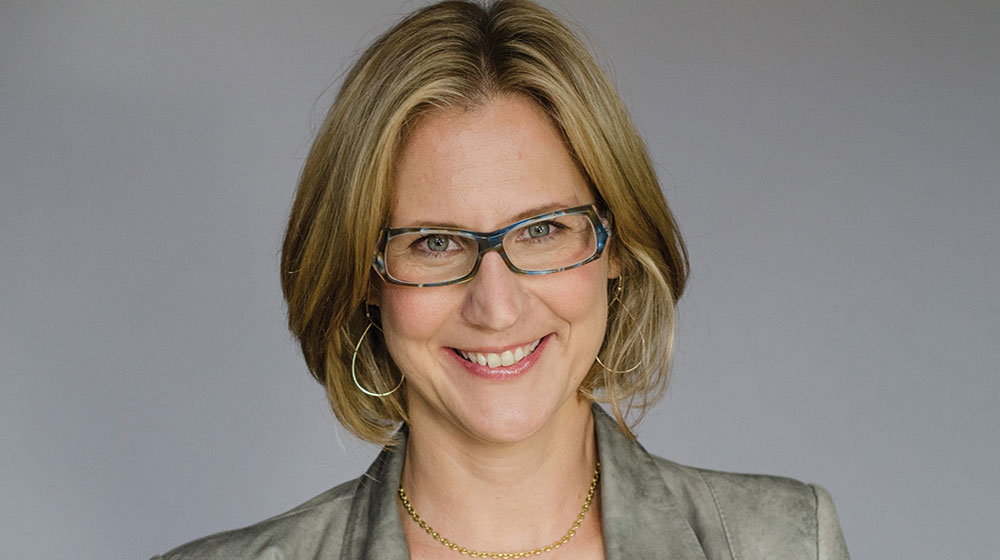
Katherine Sredl
Dr. Sredl's work has significantly impacted gender studies within marketing by theorizing and demonstrating how macro-level changes such as globalization and digitization impact and are impacted by consumers in their everyday life through everyday rituals. She uses her Croatian and American identities to integrate, challenge, and embrace data and theory in her ethnographic research. Her three most cited publications ask how portrayals of gender roles in media impacts consumption, how women respond to globalization in daily rituals, and how consumers in post-conflict markets respond to peace treaties in daily life (Dayton Accord). As an instructor, her greatest accomplishment is sending lifelong learners into marketing jobs with the knowledge, skills, and emotional intelligence to succeed in the industry and light the world on fire. Writing cases for the Follett Fellowship has given Sredl, who grew up in a family business, an opportunity to unite that experience with her academic and consulting background in multimedia storytelling.
Faculty Bio