
Love Life and Press on With Peace
Love Life and Press on With Peace
A Loyola Alum’s Journey from Palestine to the United States
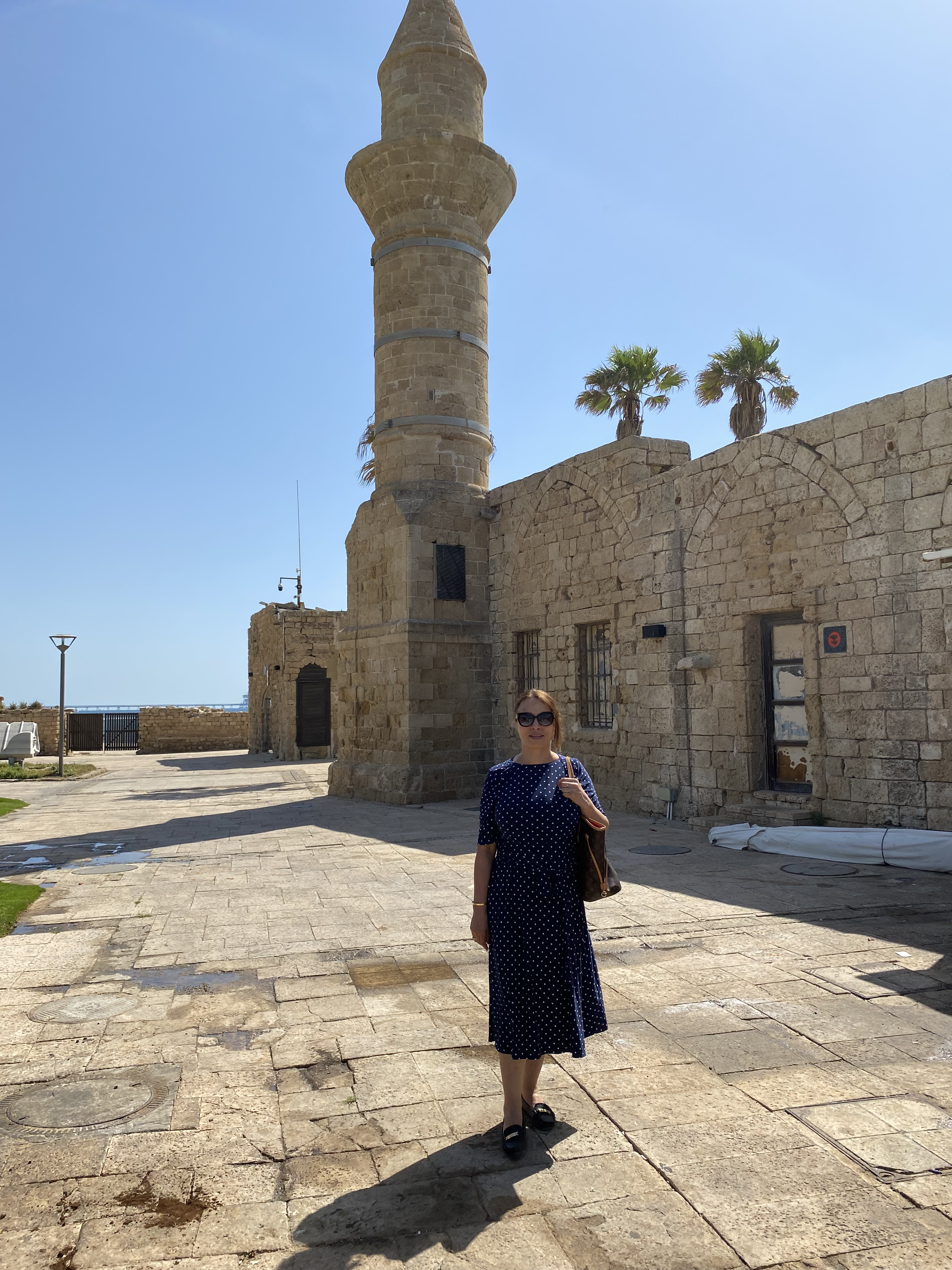 Safa Hamed in front of her great-grandfather’s mosque in Caesarea
in 2022. Her family was expelled from Caesarea in 1948.
Safa Hamed’s (BS ’98, MS ’00) journey to Loyola University Chicago did not follow a conventional path. It began in a small, occupied town in Palestine, where daily life unfolded under the watch of armed soldiers. At 22, her life changed dramatically when she met her husband and left Palestine to build a new life with him. She traveled across the world to Chicago where he lived, and settled in an apartment in Rogers Park just steps from Loyola’s Lake Shore Campus, where she would later enroll as a student.
Growing Up in Palestine
Safa grew up in Anabta, a town in the West Bank of Palestine that has been occupied since 1967. In her memoir, Love Life and Press On With Peace, she reflects on the trauma of that upbringing through a series of vivid, deeply personal memories. She recounts encounters with soldiers that left lasting impressions, including a moment from childhood when she stood frozen before a tank, unable to speak or move. In another instance, during a strict curfew, her infant sister developed a dangerously high fever. When soldiers refused to let the family leave to seek medicine, neighbors passed it quietly from house to house until it reached them. She also writes about her brother, who was only 16 years old when he was marked for arrest, and, after two years of hiding, eventually captured. She recounts their tearful goodbye in the back of a military jeep, heavy with an unspoken, terrible understanding of what likely lay ahead for him.
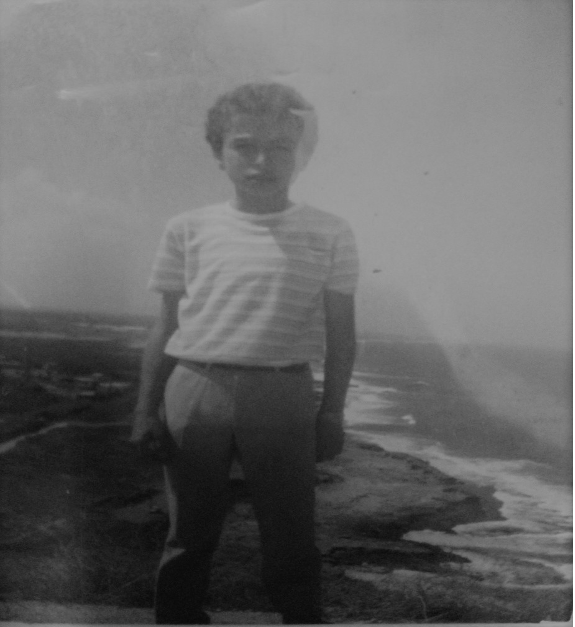
Jamal Hamed, Safa’s Brother, 1980’s
Safa got married in 1991. On the morning of her wedding day, a military loudspeaker announced an indefinite curfew, effectively canceling the celebration and leaving her in tears as her family scrambled to adjust. Her husband had to obtain special permission, and soldiers limited attendance to just her mother. As a result, none of her siblings, extended family, or close friends could be there. “I thought about the day I could not have, and as these thoughts sneaked in, I despaired,” she writes. “I should have been dreaming about my big day and what color lipstick to wear. Instead, I was thinking about all this and crying my heart out.”
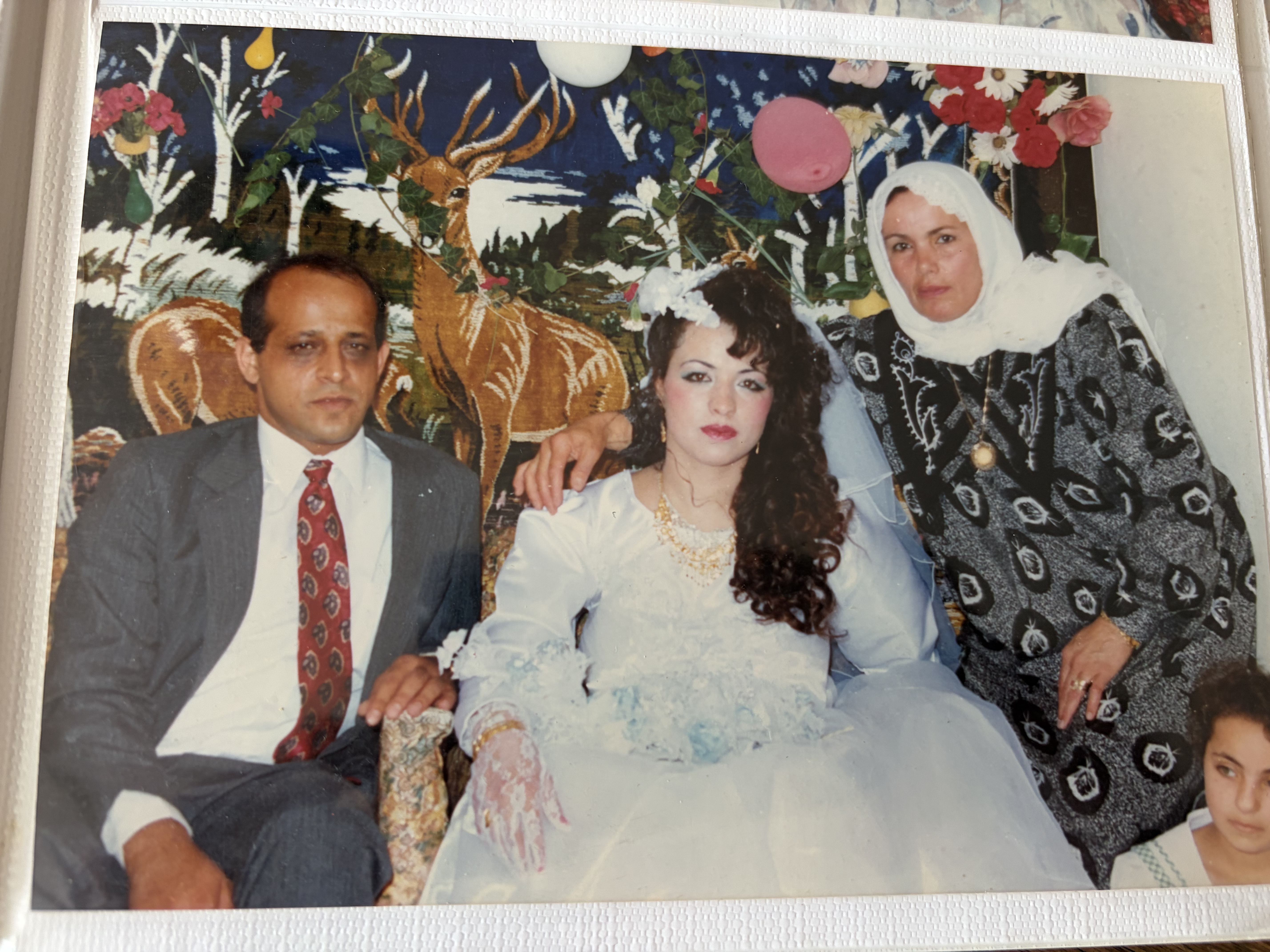 Safa’s Wedding, 1991
Her husband worked in Chicago as a mechanical engineer, so she soon joined him there. The transition was sudden and disorienting. Still, in that unfamiliar place, she felt the sense of freedom and safety she longed for in Palestine.
When she enrolled at Loyola in 1992 to pursue a bachelor’s in mathematics, she felt right at home. “I loved the school,” she says. “I felt so welcomed and included at Loyola, and the people at the Math department where amazing to me. Everyone was supporting me and welcoming me and wanted to do anything to make my life easy on campus.” She specifically mentioned Dr. Alan Saleski, a professor who had a profound impact on her life and the trajectory of her career.
Eight years later, having balanced motherhood with her studies, she earned her bachelor's degree, then her master's. During her time at Loyola, her focus shifted from mere survival and the witnessing of injustice toward a new goal: building bridges through dialogue, community, and education. “At Loyola, I learned that it’s not about me, but rather about bringing a positive change to the world and the communities we live in,” she says.
“At Loyola, I learned that it’s not about me, but rather about bringing a positive change to the world and the communities we live in." Safa Hamed
Taken to the Stars
On the first day of Dr. Dan Vaillancourt’s theology course, World Religions—a class Safa took as part of Loyola’s Core Curriculum—he made a promise to his students: “I will take you to the stars in this class.”
And he did. Over the semester, he guided students through five major world religions, approaching each with a sense of reverence and intellectual curiosity. “The way he taught us about these religions made us appreciate the beauty and spiritual aesthetic of each belief system.”
For Safa, the experience was transformative. “I came to Loyola knowing one religion and one culture. I left the school feeling tremendous respect for the religions and beliefs of others, even when they contradict my own truths,” she says. The class became another moment of clarity, helping her define her goals and aspirations. “I’m glad I stayed to experience being taken to the stars by a professor who believes that man and beauty can change the world. I want to change the world and bring peace and beauty to it.”
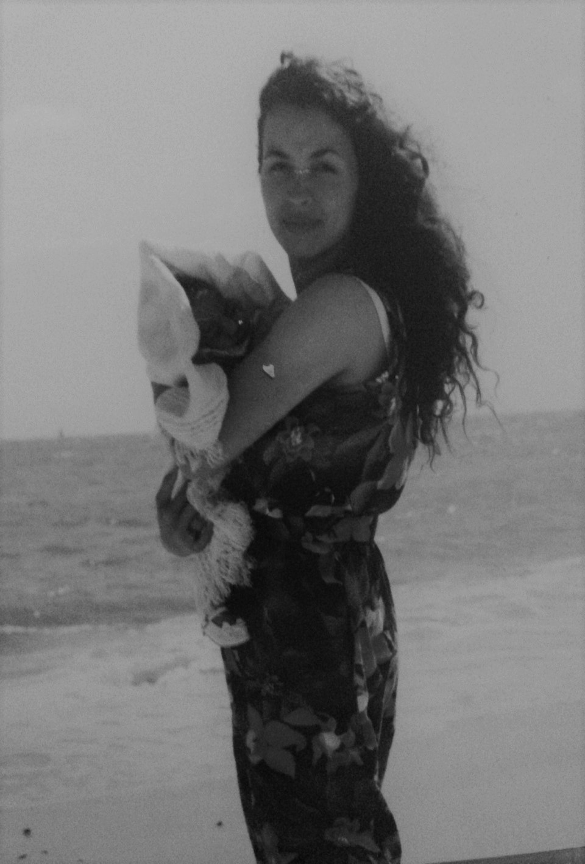 Safa with her baby daughter Dalia (BBA ’15) in 1993
Understanding Suffering
In 1999, Elie Wiesel, renowned Holocaust survivor, author, and Nobel Peace Prize laureate, was invited to speak to the Loyola community. Eager to learn from a man who had much success bringing compassion for his people through his writing, Safa was excited to attend and learn how she could do the same. The talk allowed her to recognize the parallels between their experiences: dehumanization, suffering, survival, and the urgency of bearing witness.
His talk marked a shift in her perspective. It brought into focus the suffering of the Jewish people, prompting her to draw parallels and move beyond the boundaries of her own experiences. “I was drowning in my thoughts as contradicting ideas were pushing themselves forward, all at once, in my already confused existence.”
“This latest piece of knowledge about the Holocaust was crucial to my understanding,” she writes. “I felt as though God had spoken to me. I believe he helped me know that when I understand the suffering of others, the understanding of my own suffering deepens. By acknowledging the suffering of others, healing can be achieved, and peace can coexist amongst our people. This realization was a turning point in my life. I had always wanted to write about the suffering of my people, and in the process and the quest of doing so, I had learned about the people on the ‘other side.’ Those who had their share of suffering, heartache, and loss.”
Safa initially titled her memoir Layl, the Arabic word for “night,” a deliberate nod to Elie Wiesel’s 1956 memoir, Night. The reference reflected her desire to elicit the same depth of compassion for the Palestinian experience that Wiesel’s work had evoked for the Jewish people. But over time, and with guidance from her editor, she reconsidered. The final title reflects a shift in tone, away from darkness alone and toward something brighter, defined by resilience and hope.
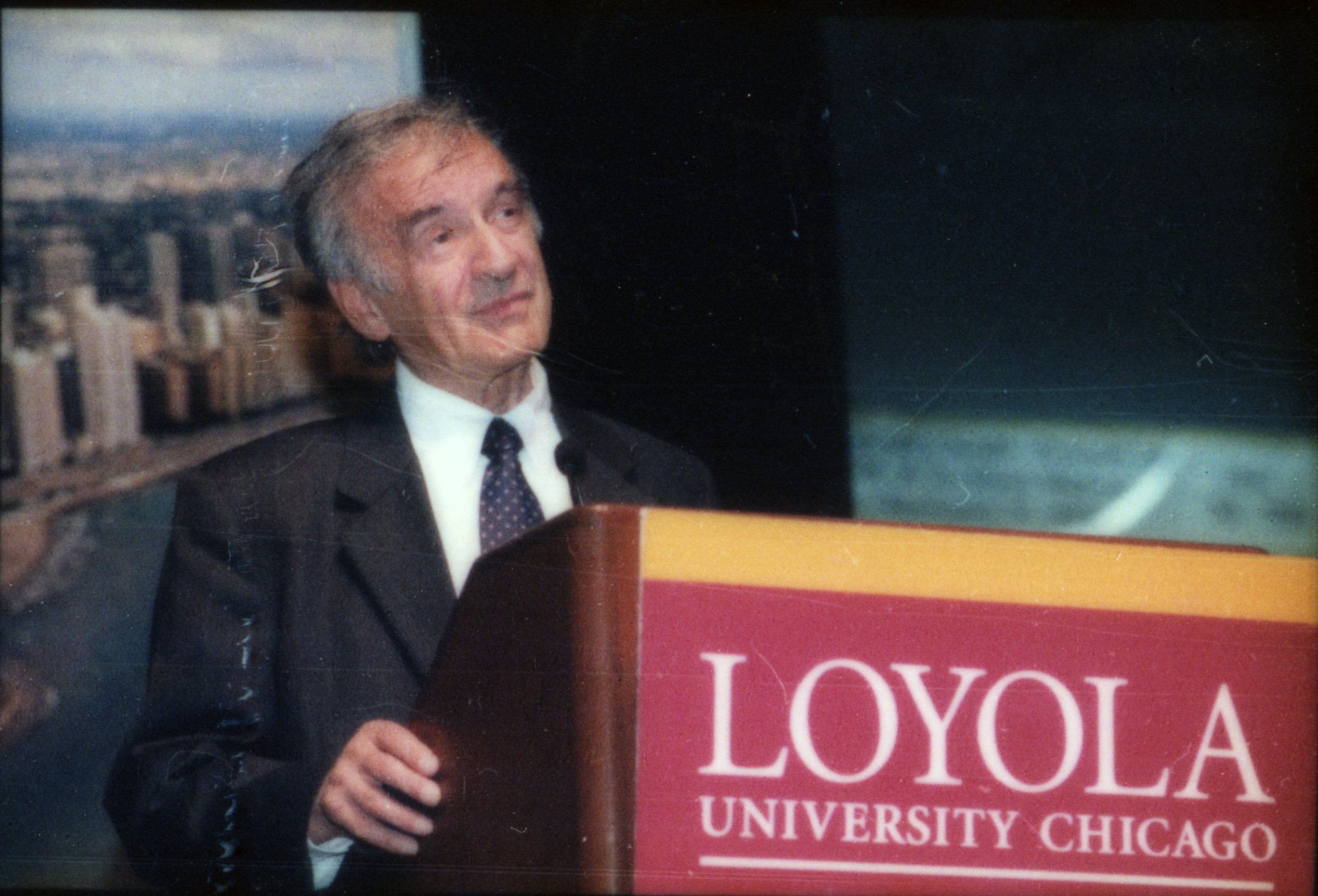 Elie Wiesel at Loyola in 1999
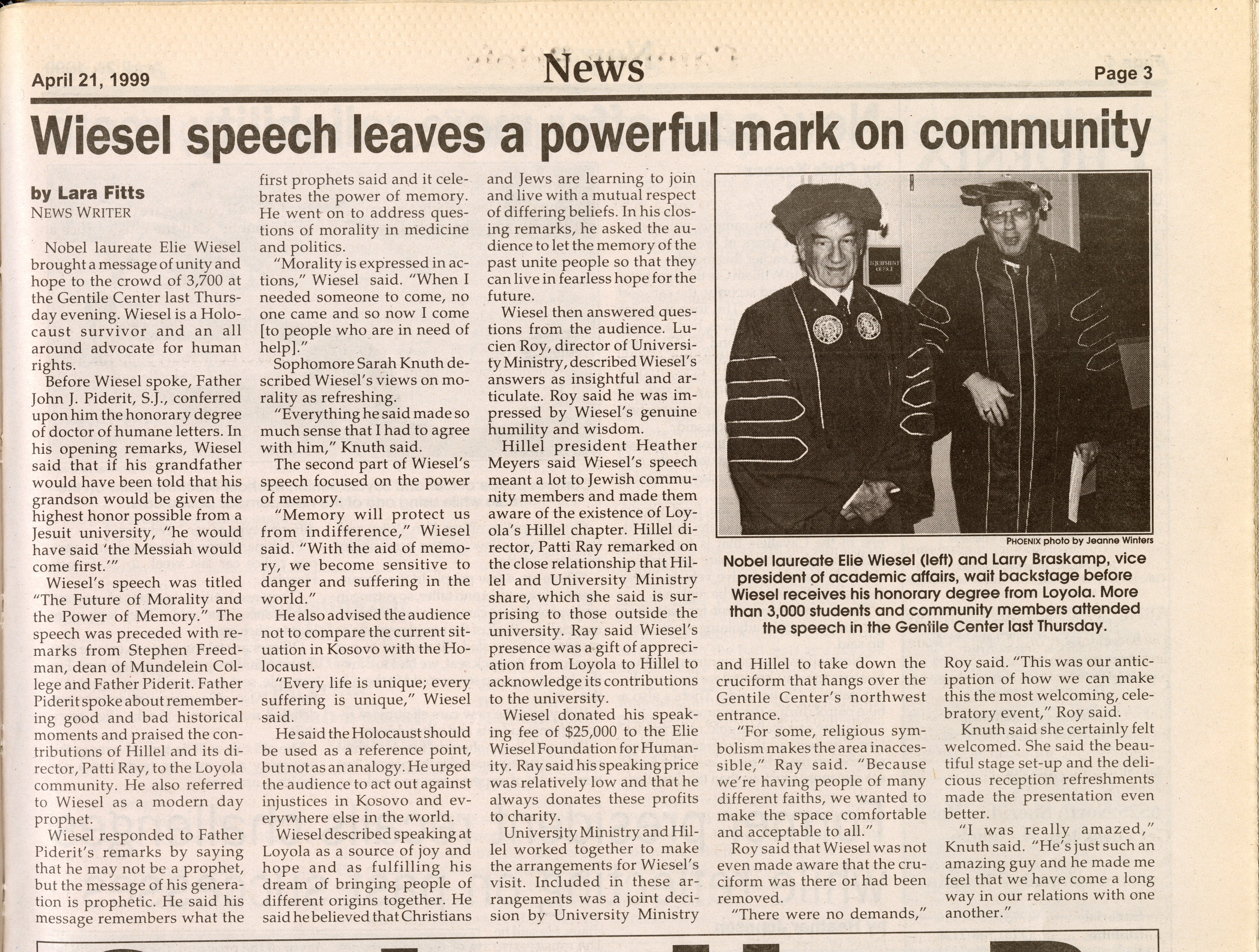 Article about Elie Wiesel’s talk in 1999 issue of The Loyola Phoenix
“I am Palestinian.”
Another speaker who left a lasting impression on Safa was Coretta Scott King—author, activist, civil rights leader, and the wife of Martin Luther King Jr. King visited Loyola in 1996, and her presence and message resonated in a meaningful way.
Safa saw in King’s message a reflection of her own reality, drawing parallels between the civil rights movement in the United States and life in Palestine. This deepened her commitment to use her voice to confront injustice and work toward peace and equality.
“When I used to say that I was Palestinian or Muslim, there was always this discomfort. People do not know what to say to you. But when I walked into the theater that day, and Coretta King started her talk with ‘I am a Black woman and I stand tall like a cypress,’ I felt like she was speaking to me. I felt empowered to get rid of all the fear and say that I am Palestinian, I am Muslim, I am a woman; and that’s what makes me strong.”
The legacy of the civil rights movement also renewed her sense of possibility. “On this day, I felt free,” she writes. “On this campus, I was set free while in the presence of a woman who husband’s words and nonviolent actions led to the success of the civil rights movement, and whose dream became the dream of us all. I, too, have a dream that one day Palestinians will live in peace, prosperity, and coexistence with their neighbors the Israelis.”
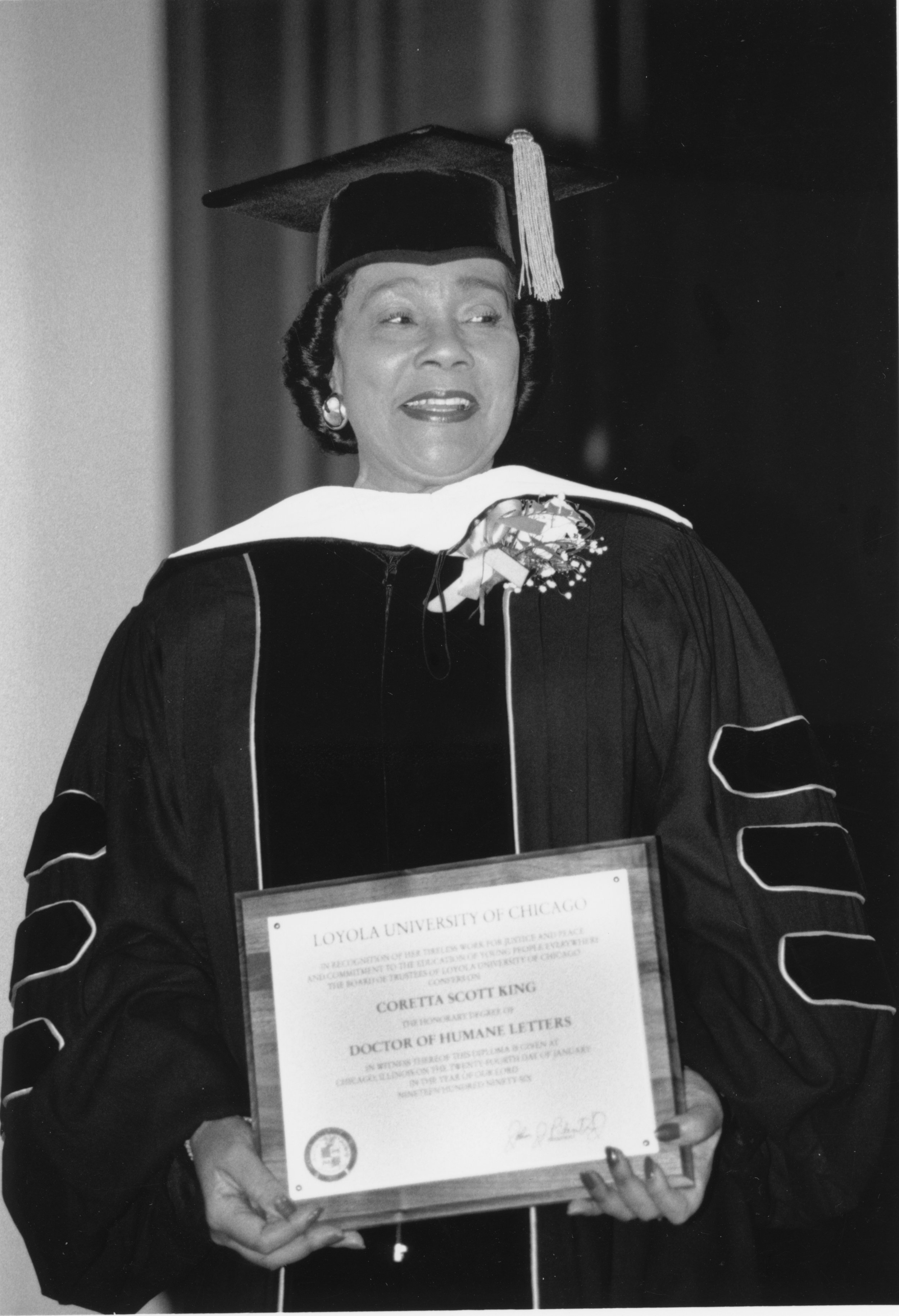 Corretta Scott King at Loyola in 1996
"On this day, I felt free. On this campus, I was set free while in the presence of a woman who husband’s words and nonviolent actions led to the success of the civil rights movement, and whose dream became the dream of us all. I, too, have a dream that one day Palestinians will live in peace, prosperity, and coexistence with their neighbors the Israelis.” Safa Hamed from her memoir "Love Life and Press on With Peace" (page 188)
After Loyola
“Loyola will always be my second home. Even now when I drive past it, I am filled with warm memories and love. It will always have a big piece of my heart.”
Safa’s mathematics education at Loyola led her to a career in academia. After working at Robert Morris University and Northwestern University, she joined Oakton College in 2002, where she has served as a mathematics professor ever since. Alongside her academic career, she remains deeply engaged in Palestinian advocacy and peacebuilding efforts.
The Hands of Peace (HOP) program became a meaningful extension of her mission toward peace. The initiative brought Israeli and Palestinian youth together to engage in dialogue, leadership development, and cross-cultural exchange. Safa became a member of the steering committee where she supported the program by helping to recruit students from Palestinian schools.
Her memoir was another contribution to the cause, intended to give voice to Palestine while pointing toward a more hopeful future. The impulse to write it had followed her since childhood, fading and returning over the years until she finally committed to telling her story in 2020.
“Loyola is where I received an education and became a stronger woman, a career woman that can be independent and successful on her own. And it gave me the belief in myself that one day, I will be able to write this book and have it at Loyola’s library. I’m so happy we have this book at Loyola. I feel like the blessings of Loyola are forever.”
What began as an effort to document Palestinian suffering gradually took on a broader purpose. The book evolved into a reflection of hope and a vision for what peace in the region could become. “I want to leave a legacy of peace and a deeper understanding among my people of Palestine and the people of Israel. A peace rooted in the understanding of each side’s sufferings, and, in the belief that peace would bring the light needed to illuminate the dark nights of the conflict. On both sides, we would light the candles of peace one by one to bring a new era of forgiveness, hope, and prosperity.”
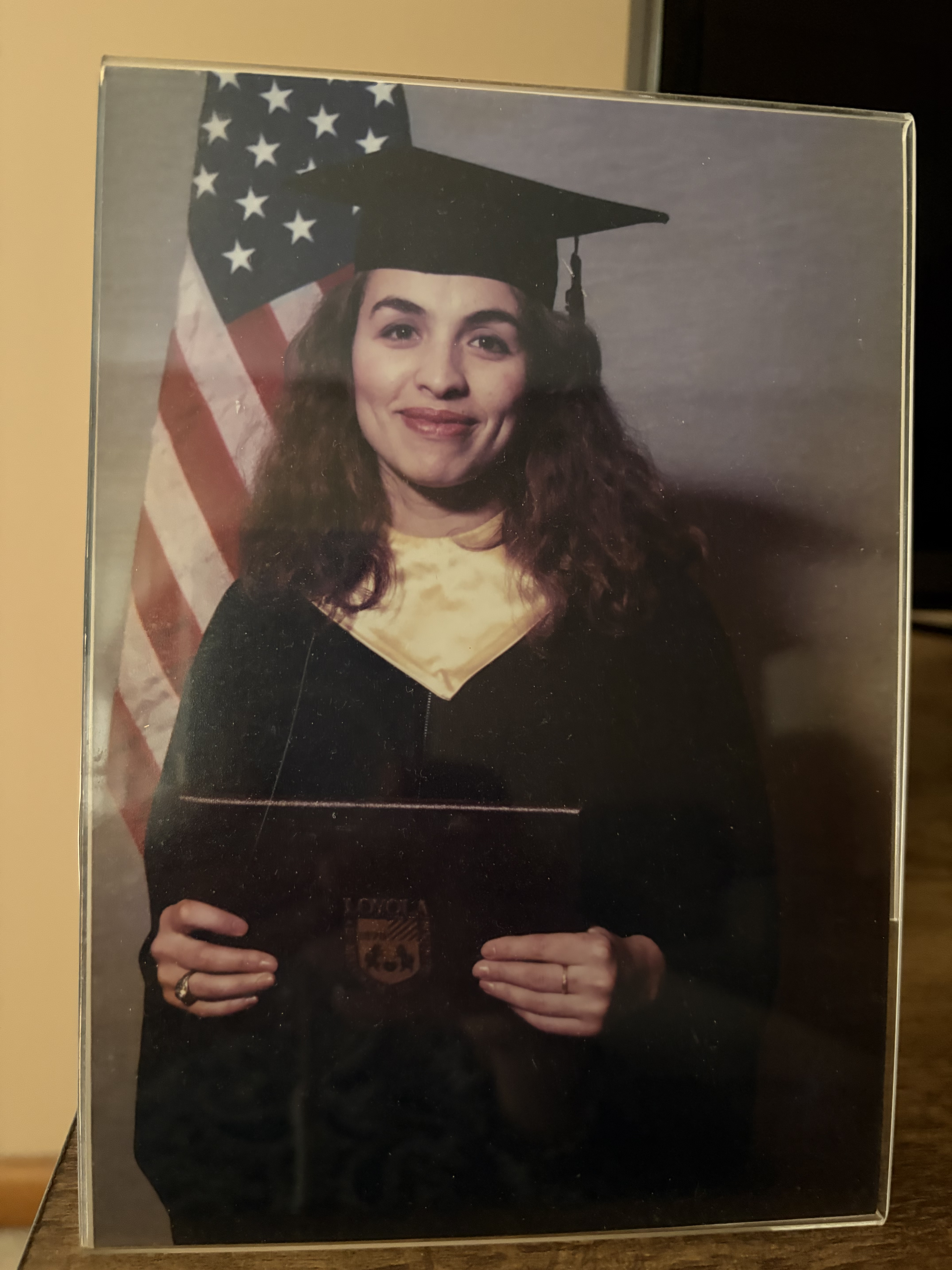 Safa’s Graduation from Loyola in 1998
“I want to leave a legacy of peace and a deeper understanding among my people of Palestine and the people of Israel. A peace rooted in the understanding of each side’s sufferings, and, in the belief that peace would bring the light needed to illuminate the dark nights of the conflict. On both sides, we would light the candles of peace one by one to bring a new era of forgiveness, hope, and prosperity.” Safa Hamed from her memoir "Love Life and Press on With Peace" (page 124-5)