
Sánchez-Perry Publishes Book on Mexica Ritual Specialists
Book was published by the University of Arizona Press
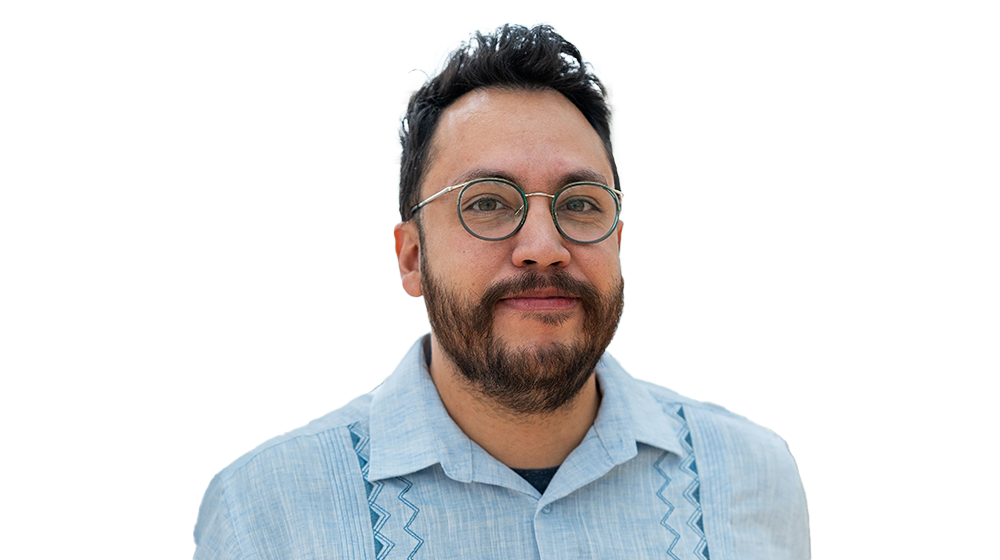
Josefrayn Sánchez-Perry, PhD, assistant professor of religious studies in the Department of Theology at Loyola University Chicago’s College of Arts and Sciences, has published Incense and Performance: The Lives of Mexica Ritual Specialists through the University of Arizona Press.
The book examines the lives of two Mexica ritual specialists (better known to many as the Aztecs), Quauhnochtli and Quauhcoatl, who died during the Spanish conquest of Mexico while protecting the temple of Huitzilopochtli. Drawing on Indigenous-language texts, historical documents, and material evidence from temple and neighborhood spaces, Sánchez-Perry reconstructs the lives and responsibilities of two individuals whose stories offer a window into Mexica religious and social life.
“Dr. Sánchez-Perry’s research helps us better understand peoples and cultures whose stories are often overlooked,” said Peter J. Schraeder, PhD, Dean of the College of Arts and Sciences. “His work brings together history, language, and cultural evidence to give us a clearer picture of Mexican society and the important role that ritual specialists play in their communities.”
Brandon Bayne, an associate professor of religious studies at the University of North Carolina at Chapel Hill and author of Missions Begin with Blood: Suffering and Salvation in the Borderlands of New Spain, praised the depth of Sánchez-Perry’s research in a review of the book.
“Drawing on a vast array of documentary, visual, and material sources, Josefrayn Sánchez-Perry uses his impressive linguistic and historical skills to reconstruct the life trajectories of two men who were neither rulers nor commoners, but key actors navigating a stunningly complex ritual and social network,” Bayne wrote.
The book explores the many roles ritual specialists played in their communities, including caring for sacred forces, making offerings, participating in warfare, providing counsel, and performing music and dance. Sánchez-Perry also examines the connections between the educational traditions of two precontact educational systems throughout central Mexico, offering new insight into how these specialists shared ritual responsibilities.
Through the lives of ritual specialists, Incense and Performance examines how religious practice connected people, animals, plants, and deities in Indigenous Mexican society.
“I want readers to take away a more comprehensive understanding of Indigenous religious traditions from Mexico,” said Sánchez-Perry. “In popular media, some have reduced the Mexica to human sacrifice and ritual spectacle. But when Spanish conquistadores and Christian friars encountered the people of the Americas, they found complex urban societies that rivaled those in Europe. Through Indigenous-language sources and archaeological sites, I found that spectacle was matched with personal discipline, family dynamics, and political indifference, the things that make all of us human. I want to highlight these stories too.”
Sánchez-Perry is a historian of religion whose research brings together early modern Mesoamerica, the history of science, and religious studies. His scholarship has appeared in the journals Religion and Material Religion. His research has been supported by the National Endowment for the Humanities, the Newberry Library, and the American Academy of Religion, among other organizations. He was also selected for the 2025–2027 cohort of Young Scholars in American Religion.
Learn more about Sánchez-Perry and Incense and Performance: The Lives of Mexica Ritual Specialists.
About the College of Arts and Sciences
Founded in 1870, the College of Arts and Sciences is the oldest and largest of Loyola University Chicago’s 13 schools and colleges, serving as the academic home for nearly 8,000 students (roughly 50 percent of Loyola’s total student population). It is academically diverse with twenty academic departments that span an array of intellectual pursuits, ranging from the natural sciences and computational sciences to the humanities, the social sciences, and the fine and performing arts. It is also highly interdisciplinary with thirty-one interdisciplinary programs and seven interdisciplinary centers, including the mission-centric Jesuit Heritage Research Center and the Hank Center for the Catholic Intellectual Heritage. The College is home to over 450 full-time, award-winning faculty, who are committed to teaching and research excellence. They teach nearly 2,000 classes each semester, including 88 percent of all Core Curriculum classes taken by undergraduate students across the university. They also contribute to eleven doctoral programs whose graduates have helped propel Loyola starting in 2025 to R-1 research status (the highest research status a university can achieve). Our students and faculty are engaged internationally at Loyola Rome in Italy, as well as at dozens of university-sponsored study abroad and research sites around the world. Home to the departments that anchor the university’s Core Curriculum, the College seeks to prepare all of Loyola’s students to think critically, to engage the world of the 21st century at ever-deepening levels, and to become caring and compassionate individuals. Our faculty, staff, and students view service to others not just as one option among many, but as a constitutive dimension of their very being. In the truest sense of the Jesuit ideal, our graduates strive to be “individuals for others.”