
Eric Twadell Q&A
Four Loyola Alumni Reflect on Careers in Education
Q&A: Eric Twadell (MEd ’98, PhD ’07)
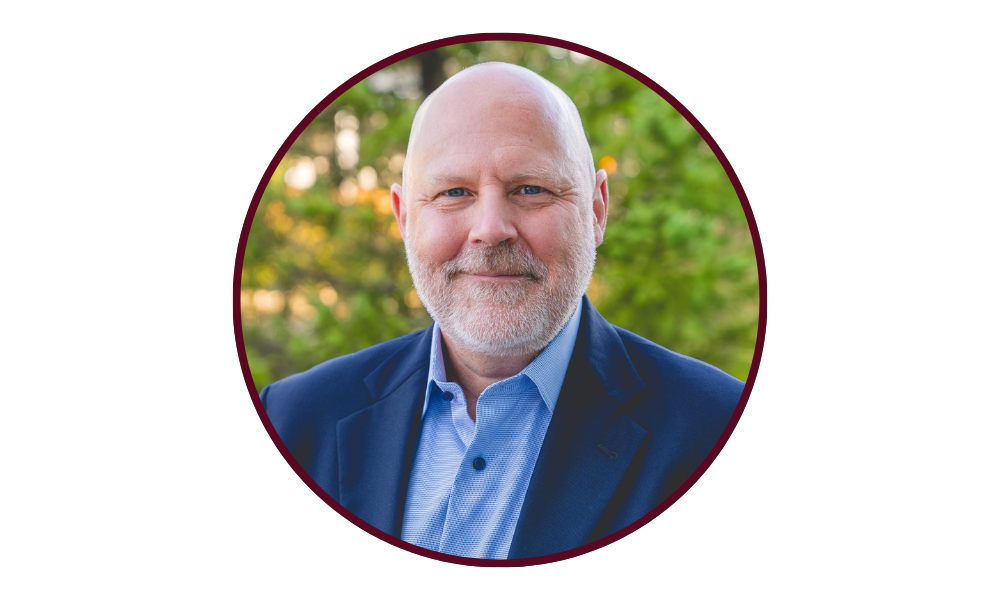
Eric Twadell (MEd ’98, PhD ’07) is retiring as superintendent of Adlai E. Stevenson High School District 125 in Lincolnshire, Illinois. Before serving as superintendent, he held several roles at Stevenson, including social studies teacher, curriculum director, and assistant superintendent for leadership and organizational development.
Twadell has authored multiple books and professional articles and is recognized for his work advancing professional learning communities and school improvement efforts nationwide. In addition to his work in education, he has coached athletic teams and facilitated outdoor education and adventure travel programs.
He earned a master’s degree in curriculum and instruction and a doctorate in educational leadership and policy studies from Loyola University Chicago.
As part of our "Four Loyola Alumni Reflect on Careers in Education" series, Twadell reflects on a career dedicated to expanding opportunities for students, leading through service, and advancing educational equity, as well as the lasting influence of Loyola on his leadership journey.
What inspired you to pursue a career in education, and how did your experience at Loyola and the School of Education shape that path?
Honestly, I wasn't the most naturally driven student in high school — but at Saint Joseph's College, I had professors who believed in me before I fully believed in myself. That experience changed everything. It's where I fell in love with learning, and it's what made me want to serve that same role for students who may have been in the place I was. When it came time to pursue my graduate work, I chose Loyola because it felt like a natural continuation of that same tradition at Saint Joe’s — a deep commitment to equity, social justice, and the belief that every student, regardless of background or circumstance, deserves access to a high-quality education. That conviction has been at the center of everything I've done as an educator and a leader.
What is one moment or accomplishment in your career that stands out as especially meaningful to you?
Our mission at Stevenson is "Success for Every Student" — but I always knew that for some students, success required more than a great high school experience. Not every student arrives with the support, mentoring, or financial resources to make college a reality. About ten years ago, we launched the Stevenson to College program, which provides six years of mentoring and financial support to first-generation college students who want to pursue higher education but need a hand getting there. To date, we've served over 100 students who might otherwise never have had that opportunity.
How did your time in the School of Education prepare you for leadership as a superintendent?
Loyola gave me a deep understanding of leadership that has stayed with me throughout my entire career. In particular, the work of Thomas Sergiovanni — his emphasis on servant leadership, on building genuine community, and on collaboration as the engine of school improvement — fundamentally shaped how I thought about my role as a superintendent. I never saw myself as someone who ran a school district. I saw myself as someone who served one. Loyola gave me the intellectual framework to understand that distinction, and the conviction and confidence to lead from it every day.
What advice would you give current students or aspiring school leaders?
My advice to aspiring school leaders is simple: develop a leadership framework and lead from it every single day. Not just when it's easy, not just when conditions are favorable — every day. Jim Collins said it best: "Greatness is not a function of circumstance. Greatness, it turns out, is largely a matter of conscious choice and discipline." That has always resonated deeply with me. The leaders who make the greatest difference aren't necessarily the most talented or the most resourceful — they're the ones who are relentlessly intentional. Know what you believe. Know why you believe it. And then have the discipline to lead from that place, even when it's hard. I also believe in ruthless prioritization. The demands on a school leader are endless, and everything will feel urgent. The best leaders I know have the clarity and courage to protect what matters most — and the discipline to say no to everything else.
As you retire, what reflections do you have on your career and your connection to Loyola?
Mostly, I am filled with gratitude. Gratitude for the students and community I have had the privilege to serve, for the educators I have learned alongside, and for the work itself, which has never felt like work to me, I can honestly say I looked forward to going to school every day. Loyola gave me a deep understanding of equity and social justice that became the compass of my leadership. The belief that every student deserves access to a high-quality education — regardless of background or circumstance — has driven every decision I have made as a superintendent. To Loyola, I simply want to say thank you. Thank you for giving me a solid foundation that I have built an entire career upon.