
Michael Lubelfeld Q&A
Four Loyola Alumni Reflect on Careers in Education
Q&A: Michael Lubelfeld (EdD ’05)
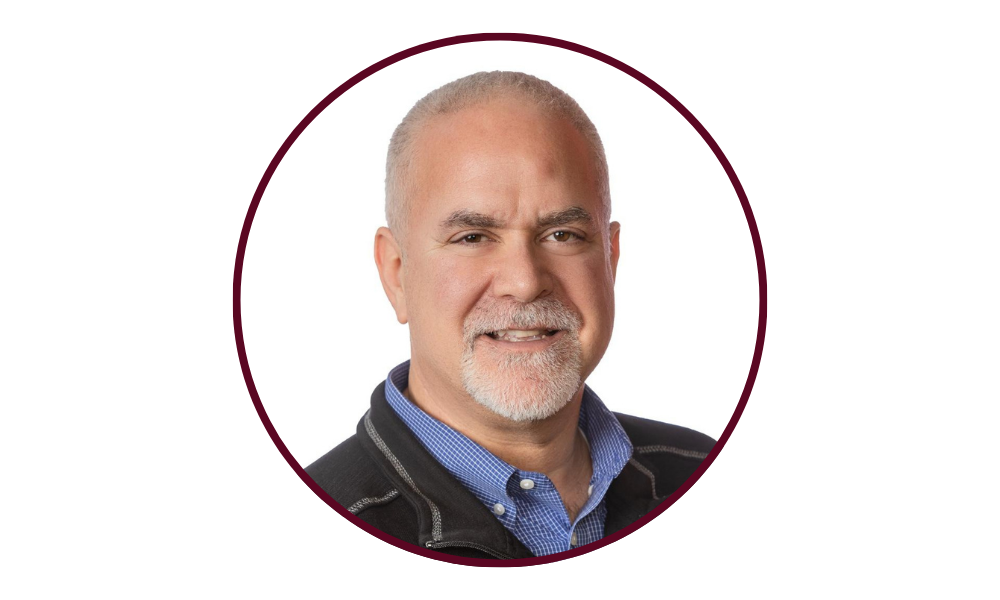
Michael Lubelfeld (EdD ’05) has served as a public school superintendent in Illinois since 2010, most recently leading North Shore School District 112, which serves the communities of Highland Park and Highwood, Illinois. A nationally recognized educational leader, he has focused on leadership development, student voice, and innovative educational practices throughout his career.
Lubelfeld is a frequent speaker and the co-author of several books on educational leadership and school culture. His work has earned multiple professional honors, including the 2021 Administration and Supervision Distinguished Alumni Award from the Loyola University Chicago’s School of Education.
He earned a doctorate in educational leadership from Loyola University Chicago.
As part of our "Four Loyola Alumni Reflect on Careers in Education" series, Lubelfeld reflects on a career dedicated to educational leadership, continuous learning, and service, as well as the lasting influence of Loyola on his professional journey.
What inspired you to pursue a career in education, and how did your experience at Loyola and the School of Education shape that path?
My initial “why” was rooted in a deep passion for government and history, but it was a mentor's guidance that encouraged me to explore teaching because of my people skills and leadership potential. I began in the middle school classroom in 1993, and my time at Loyola profoundly shaped the trajectory of my career. I earned my administrative certification there in 1998 and later pursued doctoral work that helped me connect research, reflection, and practice. The School of Education and professors who challenged and inspired me helped me grow from an educator into a scholar-practitioner and gave me a stronger intellectual foundation for the values that later shaped my leadership.
What is one moment or accomplishment in your career that stands out as especially meaningful to you?
A deeply meaningful accomplishment for me has been helping lead North Shore School District 112 through a period of major transformation by strengthening trust, creating stability, and building a foundation for the future. Our community supported a major facilities referendum that made possible the modernization of five elementary schools as part of a broader long-range plan that has touched seven schools overall. At the same time, our strategic agenda was rebuilt through extensive community engagement, and student outcomes continued to rise. That combination of trust, long-range planning, and student growth feels especially meaningful to me because it reflects a sustainable, institutional arc of work that will outlast any single superintendent.
How did your time in the School of Education prepare you for leadership as a superintendent?
Loyola prepared me to think like both a practitioner and a learner. My doctoral experience pushed me to study instruction seriously, test my assumptions, and ground leadership decisions in evidence rather than instinct alone. That mindset matters in the superintendency because every decision sits at the intersection of teaching, learning, people, systems, and community trust. My continued connection to Loyola as a past adjunct also reinforced the idea that leadership is never finished; it is something we keep refining through study, reflection, and service. Professors like Drs. Gatta, Berlin, & Cienkus made lasting impressions on me and my growth as a leader.
What advice would you give current students or aspiring school leaders?
My advice centers on the idea that the work is always unfinished. The longer I have worked in education, the more convinced I have become that leadership is less about having all the answers and more about building trust, asking better questions, and being willing to keep learning. I would tell aspiring leaders to stay humble enough to unlearn old habits when the work demands it and courageous enough to make decisions that are right for children, even when they are difficult. Leadership, in my experience, is about humility, growth, and the discipline to keep becoming better.
As you retire, what reflections do you have on your career and your connection to Loyola?
As I retire, I feel mostly gratitude. Public education has been my life’s work for more than three decades, and I leave deeply thankful for the students, families, colleagues, and communities I have been privileged to serve in Highland Park, Highwood, and beyond. I am incredibly proud of Loyola and proud of the Jesuit tradition. Loyola is where I earned my administrative license and later pursued doctoral work; it remained a professional home where I taught, stayed connected, and was later recognized by the School of Education. That connection has always reminded me that our work is rooted in service and that our responsibility is to leave people and institutions stronger than we found them.