
The ARtS Initiative - 2026
The ARtS Initiative
Promoting multiple perspectives and critical thinking through art-based inquiry
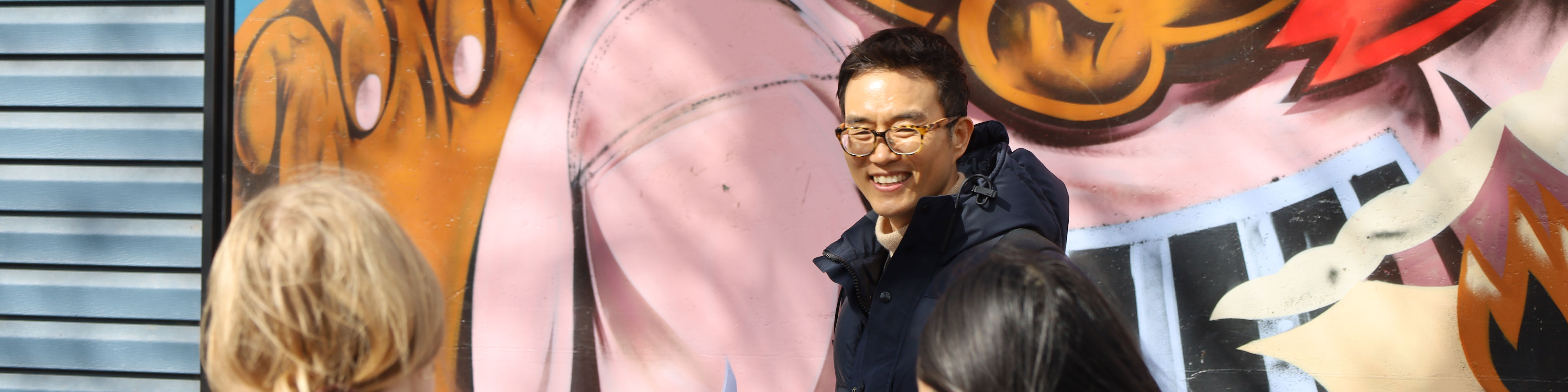
Seungho Moon, a professor in the Teaching and Learning program at Loyola University Chicago’s School of Education, created the ARtS (Aesthetic, Reflexive thoughts, and Sharing) Initiative to help students and community members understand intercultural relationships and exchange perspectives shaped by different backgrounds. Moon promotes multiple perspectives and critical thinking through art-based inquiry, using art as a way for people to engage with social issues and challenge assumptions. He uses paintings, pottery, poetry, dance, and other forms of art throughout Chicago as learning opportunities.
Moon began the initiative in Oklahoma in 2013 before bringing it to Loyola and building partnerships with local schools and families. The initiative is grounded in aesthetic education, which engages students in learning through hands-on inquiry. It also challenges what Moon describes as social numbness in education, in which dominant narratives can overlook the perspectives of underrepresented communities. Through art, participants consider how an artwork’s meaning can change when viewed through different social, gender, or racial perspectives.
Moon wants the initiative to be culturally responsive to Chicago and its history of segregation. By using art to help people examine themselves and others from different perspectives, he encourages participants to ask questions and reflect on assumptions that may shape their understanding of others. He also encourages them to consider their own positions of privilege through critical self-reflection and to think about how they can better support others.
The ARtS Initiative encourages people to engage with art in new ways. Moon often spends at least half an hour discussing a single work with a group, examining details and considering how different interpretations can change the way the work is understood. As Moon explains, “Changes may happen right away, yet true transformation takes time.” These discussions give students, families, and community members opportunities to broaden their perspectives.
Changes may happen right away, yet true transformation takes time. Seungho Moon, professor
When Moon first began the initiative, he ran it as an afterschool program and worked to bring artists into schools. He has since expanded the work through collaborations with museums and cultural institutions in Chicago. The visits are not designed as traditional guided tours. Instead, Moon facilitates discussions that encourage participants to engage actively with art and reflect on their impressions.
One example involves Grant Wood’s iconic 1930 painting American Gothic. During a visit to the Art Institute of Chicago, Moon asked participants to consider how their interpretation might change if Nan, the woman in the painting, were a woman of color rather than white. The question encouraged participants to pause and reconsider the life they imagined for her, including how race and the historical context of rural America in 1930 might shape that interpretation.
During a visit to the DuSable Black History Museum and Education Center, Moon invited participants to examine works of Black art from different perspectives and consider their historical context. He encouraged them to connect the country’s racial history with present-day experiences. These discussions challenge the idea that education can be entirely objective. What is taught as the accepted version of history may reflect the perspectives of those who sustained power while overlooking the experiences of those who were oppressed. By making room for personal interpretation and lived experience, Moon encourages participants to consider how perspective shapes their understanding of the world.
A resource for educators
Moon has also extended this approach through Creating Dialogue with Art, a curriculum resource he led and co-published with Sam Ramos, director of Gallery Activation, and Kristen French, assistant director of Gallery Activation at the Art Institute of Chicago.
The open-access digital resource introduces educators to aesthetic education through pedagogical, practical examples of arts-based inquiry they can incorporate into teaching and professional development. It encourages educators to explore questions with multiple perspectives through six themes including objectivity and perspectives, comfort and ambiguity, space and hierarchy, visual and media literacy, markets and human dignity, and compassion and community.
The project was supported by Loyola’s 2025–26 Internal Research Grant (#1333).
Moon brings his commitment to empathy, cultural understanding, and social justice to his teaching at the School of Education. He is a Fulbright U.S. Scholar and professor of curriculum studies in the Teaching and Learning program.
Influenced by his former professor and mentor, Maxine Greene, Moon encourages students to “look at things as if they could be otherwise.” Through the ARtS Initiative, he continues to encourage students and community members to question assumptions, consider new perspectives, and imagine different possibilities.
This story was updated in October 2026 to include information about Moon’s co-publication, Creating Dialogue with Art. View the publication here