
Community - Alumni - Kate Finch Profile
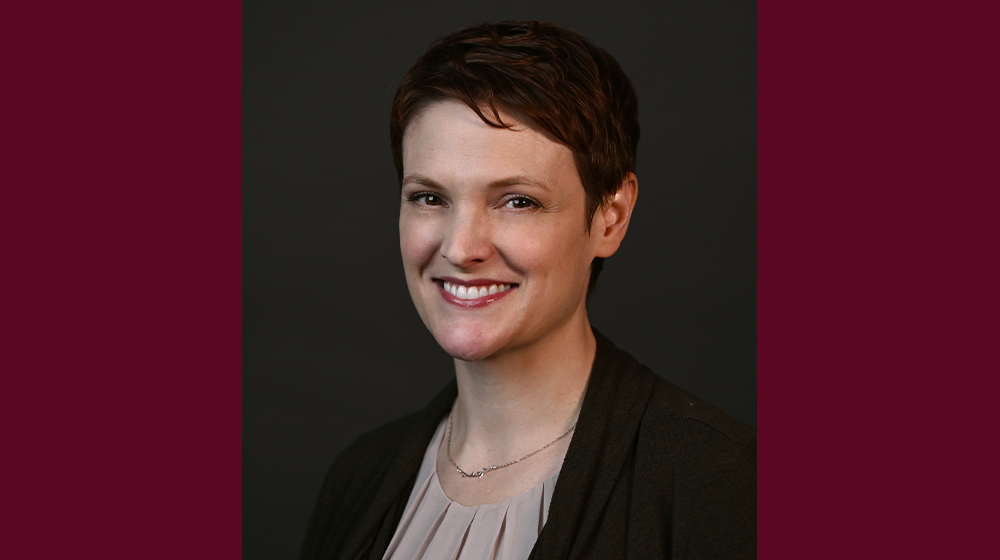
Alumni Profile Kate Finch (JD ’21)
Spotlight on Kate Finch
Before earning her JD from Loyola University Chicago, Kate Finch launched a career that spanned the arts, hospitality, and health care. At the Center for Conflict Resolution (CCR), she has mediated a broad range of cases, from housing and parenting disputes to small claims and attorney fee matters. She is active in the field as a member of Women and Diversity (WAD) and a former Great Lakes Regional Chair for Women in Dispute Resolution (WIDR), both part of the ABA’s Section on Dispute Resolution.
Through CCR’s clinical partnership with Loyola, Kate trains graduate and professional students to become certified mediators who handle mediation referrals from the Cook County court system. In her role with CCR, she has trained and facilitated nationally, working with clients such as National Geographic, the Los Angeles Fire Department, and the Northern California Innocence Project.
When did you know you wanted to be a lawyer? What was your “a-ha” moment?
It was almost 10 years ago: I was living in New York and working in another field entirely, and I’d become increasingly interested in learning why the system works the way it does. I remember asking a family friend if he thought that changing careers out of frustration with the status quo was setting myself up to be cranky and stressed forever, and he sort of twinkled and said, “Are you kidding? That’s the best reason to do it!” I signed up for the LSAT the next day.
Where did you grow up?
Kansas City!
When did you come to Loyola School of Law, and why? What is your role?
I first came to Loyola as a student back in 2018. I was debating leaving the East Coast and toured a bunch of schools in the Midwest before finding Loyola. After graduating, I was delighted to find a way back into Loyola’s halls in a teaching capacity: Through programming with the Center for Conflict Resolution, I work with mediation advocacy students as well as with students working to certify as mediators through Loyola and CCR’s clinical partnership.
What is your favorite thing about working with students?
I love the enthusiasm students have for tackling new subjects—if you’ve made it as far as Loyola, it’s because you want to be here and you want to learn. I also get bored easily, so I enjoy finding new ways to work through material that work for any given group of students.
What is your most memorable achievement at the School of Law?
Am I allowed to say, “getting through it in one piece?” Law school certainly isn’t the easiest way to spend 3-4 years. As a student, I think my most memorable moments were from my time as an academic tutor (Civil Procedure) and in moot court (the family law team). As an alum, I love seeing former clinic students taking real mediations at CCR.
What does Loyola's mission mean to you?
I chose Loyola for the programming and the social justice value…and also because I liked the vibe in the Loyola community. The notion of cura personalis is appealing in both academia and in advocacy—everyone should be treated like a whole person and not like a problem to solve.
What is the best piece of advice you’ve ever received?
“Wear comfortable shoes, stay flexible, and be ready to change your plan. But mostly comfortable shoes.” (From my maternal grandmother, who was an avid traveler.)
What do you teach your students about advocacy in dispute resolution processes?
You can’t be a good advocate, a good mediator, or even a good friend unless you know how to listen. In mediation training, we talk a lot about how people can be so people-y, and it’s true. If you stay curious and work to understand what’s beneath the surface of a conflict, you’re more likely to find solutions that actually last.
Tell us something most people at Loyola would be surprised to know about you.
I used to do voiceover work full-time. There are still computer programs and ad campaigns floating around that feature a relentlessly cheerful version of me selling or explaining something.
Before earning her JD from Loyola University Chicago, Kate Finch launched a career that spanned the arts, hospitality, and health care. At the Center for Conflict Resolution (CCR), she has mediated a broad range of cases, from housing and parenting disputes to small claims and attorney fee matters. She is active in the field as a member of Women and Diversity (WAD) and a former Great Lakes Regional Chair for Women in Dispute Resolution (WIDR), both part of the ABA’s Section on Dispute Resolution.
Through CCR’s clinical partnership with Loyola, Kate trains graduate and professional students to become certified mediators who handle mediation referrals from the Cook County court system. In her role with CCR, she has trained and facilitated nationally, working with clients such as National Geographic, the Los Angeles Fire Department, and the Northern California Innocence Project.
When did you know you wanted to be a lawyer? What was your “a-ha” moment?
It was almost 10 years ago: I was living in New York and working in another field entirely, and I’d become increasingly interested in learning why the system works the way it does. I remember asking a family friend if he thought that changing careers out of frustration with the status quo was setting myself up to be cranky and stressed forever, and he sort of twinkled and said, “Are you kidding? That’s the best reason to do it!” I signed up for the LSAT the next day.
Where did you grow up?
Kansas City!
When did you come to Loyola School of Law, and why? What is your role?
I first came to Loyola as a student back in 2018. I was debating leaving the East Coast and toured a bunch of schools in the Midwest before finding Loyola. After graduating, I was delighted to find a way back into Loyola’s halls in a teaching capacity: Through programming with the Center for Conflict Resolution, I work with mediation advocacy students as well as with students working to certify as mediators through Loyola and CCR’s clinical partnership.
What is your favorite thing about working with students?
I love the enthusiasm students have for tackling new subjects—if you’ve made it as far as Loyola, it’s because you want to be here and you want to learn. I also get bored easily, so I enjoy finding new ways to work through material that work for any given group of students.
What is your most memorable achievement at the School of Law?
Am I allowed to say, “getting through it in one piece?” Law school certainly isn’t the easiest way to spend 3-4 years. As a student, I think my most memorable moments were from my time as an academic tutor (Civil Procedure) and in moot court (the family law team). As an alum, I love seeing former clinic students taking real mediations at CCR.
What does Loyola's mission mean to you?
I chose Loyola for the programming and the social justice value…and also because I liked the vibe in the Loyola community. The notion of cura personalis is appealing in both academia and in advocacy—everyone should be treated like a whole person and not like a problem to solve.
What is the best piece of advice you’ve ever received?
“Wear comfortable shoes, stay flexible, and be ready to change your plan. But mostly comfortable shoes.” (From my maternal grandmother, who was an avid traveler.)
What do you teach your students about advocacy in dispute resolution processes?
You can’t be a good advocate, a good mediator, or even a good friend unless you know how to listen. In mediation training, we talk a lot about how people can be so people-y, and it’s true. If you stay curious and work to understand what’s beneath the surface of a conflict, you’re more likely to find solutions that actually last.
Tell us something most people at Loyola would be surprised to know about you.
I used to do voiceover work full-time. There are still computer programs and ad campaigns floating around that feature a relentlessly cheerful version of me selling or explaining something.