
Major in Music
Music Program: Bachelor of Arts Degree in Music (B.A. in Music)
Overview
The Loyola University Chicago music program invites students of all backgrounds to engage in a wide range of performance, academic, and creative opportunities. Located in one of the world’s most vibrant musical centers, and guided by a dedicated faculty of performers, scholars, and educators, music at Loyola offers rigorous training within a welcoming liberal arts environment.
At Loyola, music is studied not as an isolated discipline, but as an art form deeply connected to history, culture, technology, community, and human experience. Students develop as performers, scholars, and creative thinkers while working closely with faculty and participating in the musical life of the university and the city of Chicago.
The Bachelor of Arts in Music at Loyola University Chicago offers students a flexible, intellectually serious, and professionally relevant path through the study of music within a liberal arts setting. The degree combines foundational coursework in music theory, musicianship, music history and literature, applied study, ensemble participation, and music electives. Students shape a course of study that reflects their own interests and goals, whether in performance, composition, music history, conducting, arts administration, music pedagogy, music technology, sacred music, or related fields.
The B.A. in Music is especially well suited to students who want both depth in music and breadth across the humanities, sciences, and social sciences. Grounded in Loyola’s Jesuit and liberal arts traditions, the curriculum encourages critical thinking, creativity, adaptability, collaboration, and disciplined artistic growth. For a complete list of courses that fulfill the B.A. in Music degree, please click here.
Career Opportunities
Graduates of Loyola University Chicago’s music program have pursued careers as performers, educators, composers, conductors, studio musicians, church musicians, music therapists, arts administrators, and leaders in nonprofit and community arts organizations. Because Loyola’s music degree is grounded in a liberal arts education, graduates are prepared not only for specialized musical work, but also for professions that value communication, collaboration, cultural understanding, analytical thinking, and creative problem solving. Students may combine their musical training with study in another field, preparing them for a wide range of artistic, educational, professional, and civic paths.
Resources
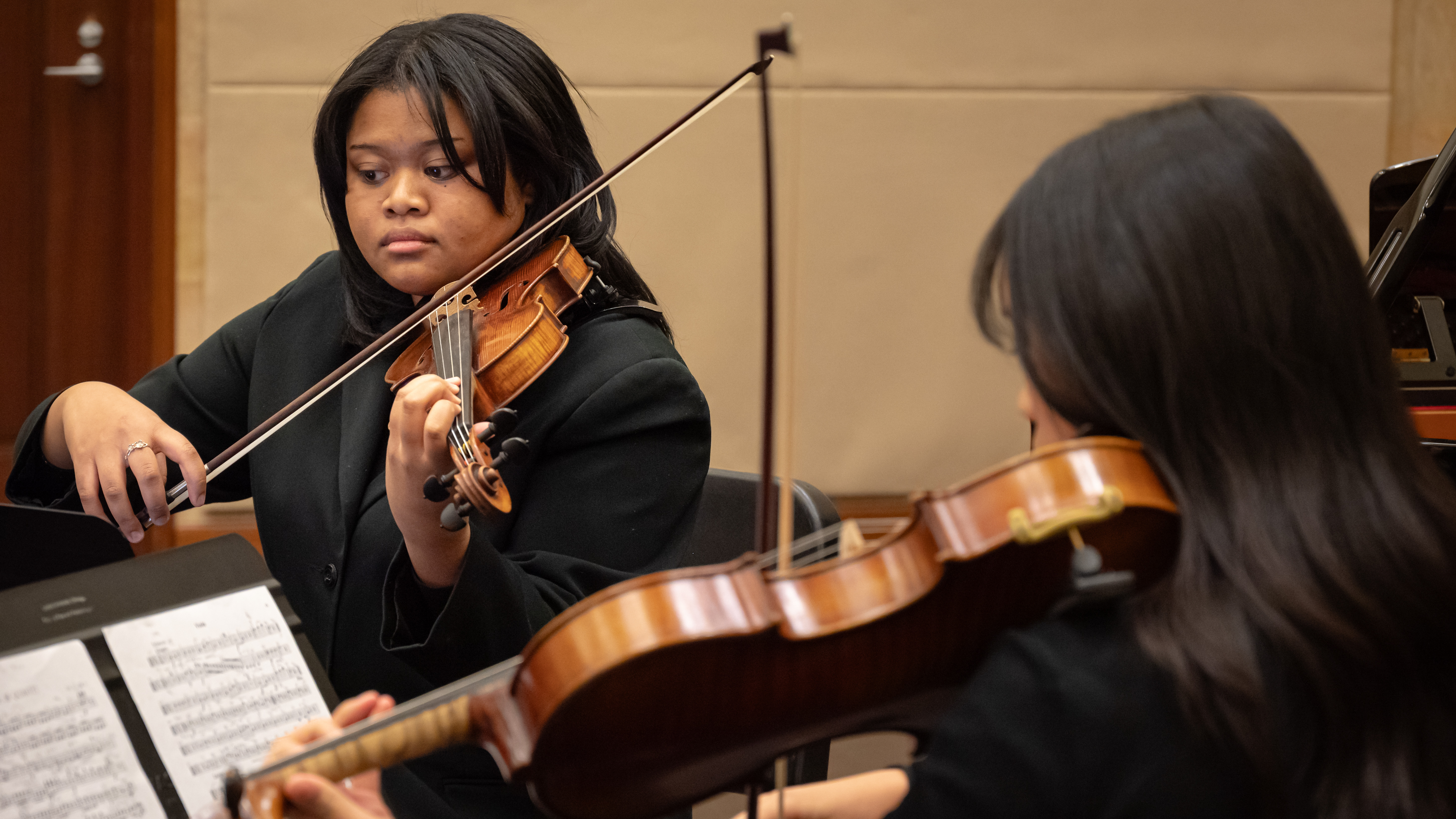
Highlights of the Loyola Music program include performance opportunities in numerous ensembles, including University Chorale, Chamber Choir, University Singers, Symphony Orchestra, Wind Ensemble, Jazz Ensemble, Percussion Ensemble, Chamber Ensemble, Jazz Combo, and Pep Band. The program also features an extensive Applied Music Program, offering one-on-one study with accomplished faculty; newly renovated performance venues; a digital music lab; a keyboard lab; and practice rooms featuring Yamaha and Kawai grand pianos.
Music majors provide artistic leadership throughout the program and help sustain a high level of collegiate music-making for majors, minors, and non-majors alike. With hundreds of students participating in ensembles each year and thousands of people attending Loyola music events annually, the music program is an important point of connection among students, faculty, staff, alumni, families, and the broader Chicago community.
Learning Outcomes
Upon completion of this program, students will demonstrate:
- a thorough understanding of the basic elements related to music theory: rhythm, melody, and harmony.
- an understanding of musical forms, processes, and structures; and the ability to employ this understanding in written and verbal analyses.
- proficiency in the basic areas of musicianship: keyboard, aural skills, and sight-singing.
- a basic knowledge of music history resulting, in part, from score analysis, dedicated listening, and concert attendance.
- the ability to apply critical thinking towards music and its contextualization.
- the technical skills requisite for artistic self-expression.
- the knowledge and skills necessary to work collaboratively as part of a musical ensemble.
- the development of metacognitive skills.
- a working knowledge of the artistic considerations necessary to produce and perform a solo recital (capstone project)
Students interested in receiving a major or minor in music should make an appointment with Dr. Frederick Lowe, Director of Music.