archive

John Drea in a portrait studio, standing in front of a backdrop.
Alumni Spotlight

John Drea Makes Broadway Debut

John Drea, Class of 2020, is heading to Broadway starring alongside Laurie Metcalf, Micah Stock, and Meghan Gerachis in Samuel D. Hunter's "Little Bear Ridge Road."

READ

Bob Newhart, Comedy Icon, Dies at 94

Bob Newhart, the genteel but sharply satirical comic whose TV series “The Bob Newhart Show” and “Newhart” were huge hits throughout the 1970s and ’80s, died Thursday in Los Angeles. He was 94. - Variety

LEARN MORE

In Memoriam: Jonathan Wilson

We are deeply saddened by the death of Professor of Theatre Jonathan Wilson, who passed away suddenly on Sunday, June 23. Professor Wilson’s contributions to Loyola Theatre, to generations of theatre students and theater artists here and across the nation, as well as the world of American Theatre warrant tribute. Our thoughts are with Professor Wilson’s family, friends, and community.

Plans are underway for a memorial hosted by the Department of Fine and Performing Arts in the Fall. Click to read about Professor Wilson and sign up to receive details about the memorial when they are available.

READ

An Unexpected Calling

Bob Newhart's improbable journey from Loyola business student to American comedy icon

READ
photos by: Lukas Keapproth

Fairview sets stage for difficult discussions, dramatic impact

Loyola Today features Fairview in the Arts & Culture section.

"An antique dining table, an upholstered ottoman, and a blanket draped over an armchair with calculated effortlessness. It might look like your great aunt’s house, but it’s the set of Fairview, a Pulitzer prize-winning play by Jackie Sibblies Drury. DeRon Williams, PhD, is directing the show at Loyola this spring." - Vivian Ewing

READ MORE

Art with Impact: Empathy on Stage

"The point of learning how to make theatre is to do it, and to do it in community, and to do it in service to the world"

READ
Jonathan Wilson standing on the Newhart Family Theatre stage

"Remembering Jonathan Wilson 1949-2024": A Ghost Light tribute in the Chicago Reader

“The most epic human is now an ancestor. He taught me and so many actors. He was special not just because he was a talented director and tough ass professor. But because he held space for the black theatre students at Loyola to learn, grow, and thrive. I learned August Wilson from this man. I wouldn’t be the actor I am today without this man. There just aren’t enough words to describe what he means to me and so many others.” - Angela Alise, Chicago actor

READ MORE
Cast of Once at Loyola University Chicago

The Loyola Phoenix calls Once "Rhapsodically Raw"

"Loyola Theatre’s rendition of this story is entertaining as ever. Striking the perfect balance between humor and heart, the show demonstrated the cast’s skills in music and acting alike, as they managed to stay in character while singing in harmony and playing a wide array of instruments. " - Loyola Phoenix

Click to read the full review.

READ

Different Journeys Through The Performing Arts Landscape

The League of Chicago Theatres, in collaboration with Loyola Career Services and the Loyola Theatre Program, recently hosted a Theatre Industry Career Fair on the Lake Shore campus with over 400 attendees and 37 participating organizations. The day began with a robust panel discussion on the varied career paths possible in today's theatre industry. Click to watch a recording of this insightful conversation.

WATCH VIDEO

Theatre alum LaNisa Frederick featured in Playbill

How Hashtag Booked's Danielle Pinnock and LaNisa Renee Frederick Are Using Comedy as Activism

While theatre has been on pause and auditions have been on Zoom, Danielle Pinnock and LaNisa Renee Frederick have taken their comedy-activism to new heights. Launched in 2018, Hashtag Booked is Pinnock and Frederick’s improvised sketch Instagram series that shares “a raw slice of the #actorslife,” diving into their experiences of being Black actors in show business.

READ MORE

Black Ensemble Theatre awarded $5 million grant.

The MacKenzie Scott Foundation awards a $5 million grant to the Black Ensemble Theatre, founded by Loyola Theatre alumna Jackie Taylor ('68). The Black Ensemble Theatre along with the National Museum of Mexican Art are among the Chicago cultural institutions to receive sizable donations by the foundation.

READ MORE

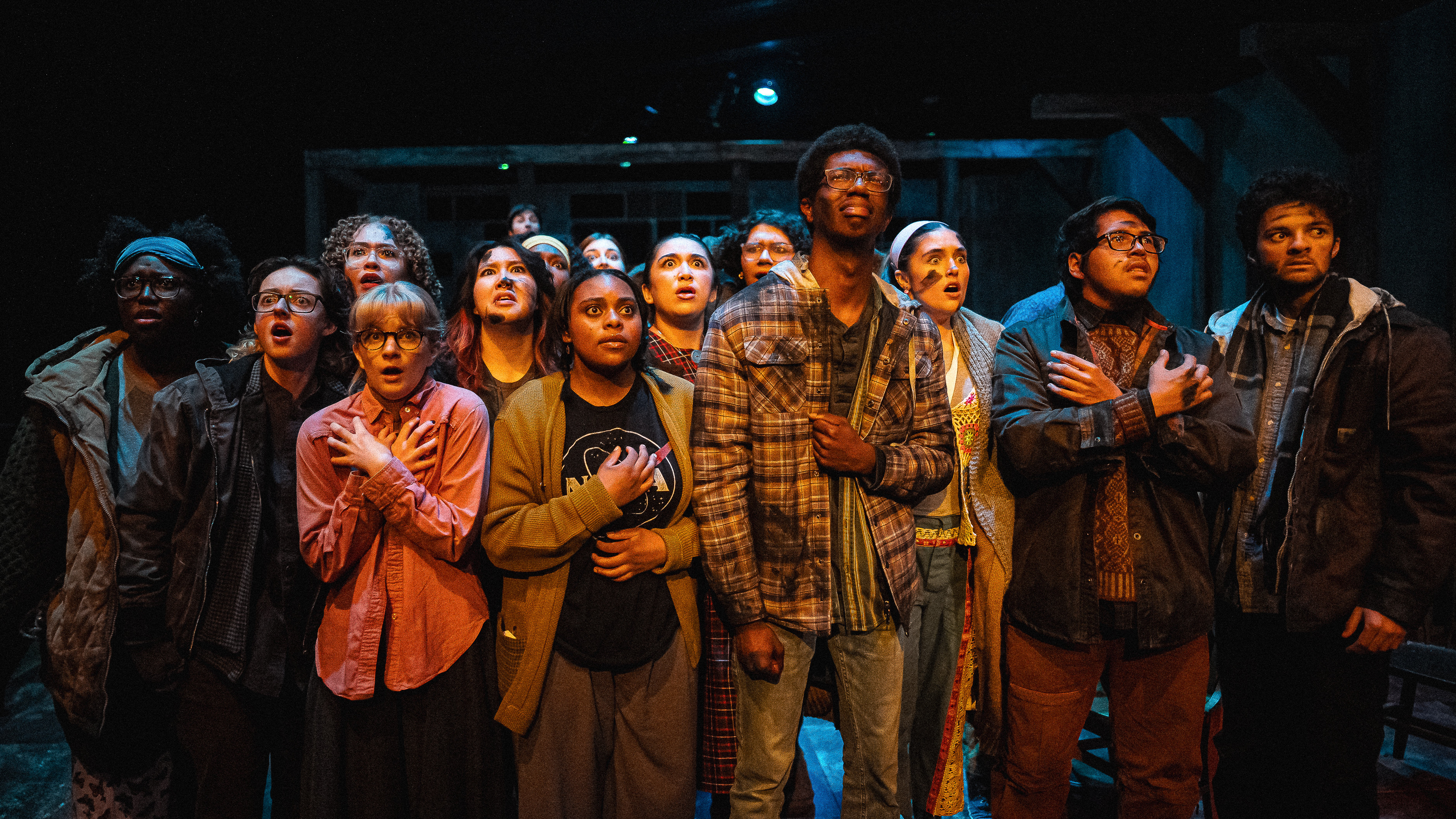
The Neighborhood of the Loners at Loyola

Faculty Feature

An interview with Jimena Márquez, playwright

In October, Loyola University Chicago Theatre will open the English-language world-premiere of the tragicomedy The Neighborhood of the Loners (El Barrio de los Solos) by Jimena Márquez. Kelly Howe, Associate Professor of Theatre at Loyola University Chicago and the translator/director of The Neighborhood of the Loners, recently spoke with Márquez about the play and some of her other theatrical work. What follows is a translated and edited transcript of that interview. 

Kelly Howe (KH): What inspired you to write El Barrio de los Solos? What was the seed of the play?

Jimena Márquez (JM): I wrote the play many years ago [in 2017], and at that time I was working in a collective from the Montevideo Acting Institute. I had directed their first production the previous year with another play . . . Then we wanted to do another project, and we did The Neighborhood of the Loners. It was a particular situation because, during that period [writing for the acting institute], I had to write plays with 18 people in mind. Dramaturgically, that's something unusual: writing plays for so many people. So the first impulse was to think: what if, with such a large cast on stage, the play also poses the peculiarity that no one leaves the scene? All 18 of them are inside almost the whole time, talking about solitude in a small space shared by so many people. It made me wonder how 18 people currently living in total solitude could possibly coexist onstage, and that was the seed, which I thought was kind of fun. Ultimately, the play also questions the concept of solitude itself: whether it's possible, right? Living in a society, is it possible to build an alternative space where solitude is achievable? 

KH: As the premise of the play unfolds, there are a lot of references to the Portuguese writer Fernando Pessoa. The script occasionally alludes to other authors, too, but Pessoa receives special attention, no? What was Pessoa’s impact on your writing?

JM: I’m a literature professor . . . and Fernando Pessoa is one of the poets who has most influenced my life. For example, at one point during my youth, I started compulsively reading Fernando Pessoa and his heteronyms [alter egos of an author or fictional voices distinct from the author’s own]. Pessoa is a poet who expresses himself through many voices and with plural sensibilities. At the time, when I was writing The Neighborhood of the Loners, a particular book of his–The Book of Disquiet, written by the heteronomous Bernardo Soares–was having a huge impact on me. It talks a lot about solitude, about the act of existing as a being in solitude. I had that entire book underlined in pencil, marked, saving things for who knows when. Pessoa's thinking in The Book of Disquiet sort of pulses throughout the whole play.

KH: Are there playwrights or other artists who have especially influenced your style of playwriting? If so, who are they? 

JM: I’m not really a playwright who can ever stay in one place. That is to say that, every time I do something like premiere a play, I immediately want to debate myself, to argue with my own play somehow. One of the ways I tend to do that is by turning toward another style of playwriting that goes in another direction. I've been arguing with myself that way throughout my entire career, so it's always hard for me to talk about my influences because they fluctuate. It's like I let myself fall in love with something, resonate with something, and I go there, but then suddenly I'm in another phase . . .  I’m still directing with the Comedia Nacional (the stable theatrical ensemble of Montevideo), but I’m working on a play that is totally fictional–and influenced, for example, by the work of Wajdi Mouawad, a Lebanese-Canadian playwright. I love his hypertextual work. 

Back when I wrote The Neighborhood of the Loners, I was reading more Argentinian playwrights like Rafael Spregelburd. The characters in The Neighborhood of the Loners talk a lot. Each one has their moment when the play sort of halts suddenly and their obsession is revealed. We hear what steals their soul or makes them a loner, etc. I was interested in how ​​Spregelburd’s dialogue between characters often stops suddenly, erupting into a monologue that is almost always fueled by somewhat extreme emotion, but then the character usually realizes what they’ve done or said in the heat of that emotion . . . So the tone of The Neighborhood of the Loners was very much influenced by a particular type of Argentinian theatre that was in vogue at the time I was writing it.

KH: Do you have any advice for student actors working on The Neighborhood of the Loners

JM: This is not advice itself, but I do remember some of what we worked on when we produced it. We worked a lot on existing in the space in silence but still loading even those silent moments with tension . . . We worked on the idea that in that play the actor’s body holds tension all the time. We worked a lot with the gaze . . .  and on investigating what is produced inside each character by what the person speaking is saying . . .Theatre exists because human relationships exist; if they don’t exist, theatre doesn’t exist. And here the characters have the particularity of being people who have chosen not to relate. There's a particular event that forces them to interact, crowded into a small space, not wanting anyone to touch their bodies, look at them, or speak to them–because all of those things make them feel like leaving. We worked on living in that discomfort onstage . . . 

KH: Another aspect of your artistic life is that you're a lyricist for murgas, an important performance genre in Uruguay. Although The Neighborhood of the Loners is not a murga, I think some of our students would also be interested in learning more about the murga tradition. For those who might not be familiar, what are murgas? How did you come to write for them?

JM: The answer to the question “what is a murga” is something that people here in Uruguay have been searching for [laughing] . . .  well, since the beginning of time. And we can never say, well, a murga is _____ and define it so easily. But murgas are performed as part of Uruguayan Carnival, which is the longest carnival in the world and a celebration that defines us as a society, or at least certain sectors of society . . .  Carnival begins in February and extends into March, and it’s a huge collective celebration that includes the murgas, which are defined partly by choral groups. Basically, we can’t say that something is a murga if there is no choir singing. A murga features 17 people, and 3 of them play percussion instruments. One person is up front directing the choir, and then that choir of voices expresses itself through poetic and humorous singing that focuses on the immediate realities that had been lived by the people of the society during the previous year . . . It’s performed as an expression of amends or atonement or a purging of sorrows. The most unique thing about murgas is that we relinquish our own pain. We find ourselves there as a society . . . The content revolves around criticism, poetry, and humor. As for me, I've been writing scripts for murgas since I was very young. And I sing in them. I dance. I play roles myself. It's an impressive popular art form–so impressive that visitors who come here from outside Uruguay often can't even believe what they are witnessing. They often can’t even believe all that happens during a performance . . .